“You’ve got to be f***ing kidding me!”
You might be wondering why I uttered a loud F-bomb while standing in my underwear in my kitchen at 6AM.
It’s because technology is allegedly getting “smarter,” but actually makes everything more dumb.
It reminded me of an ongoing battle I’ve been facing: against technology and against myself.
The fight for simplicity.
Steve versus the “Smart Fridge”
While visiting my family in Massachusetts last month, my refrigerator’s ice-maker malfunctioned.
(Yep, I know I could have turned it off before I left…but more on that in a second.)
I came home to a solid block of ice that had frozen the ice cube drawer shut.
The only solution?
Unplug the fridge and let the iceberg thaw long enough to jiggle the drawer free and remove it.
And for the next 12 hours, with both fridge doors open and all my perishable food stashed in a cooler, my frozen block of ice started to thaw, one drip at a time.
The next morning, the progress was apparent but not enough.
With my patience growing thin, I found a hair dryer and stood in front of my open fridge for 45 minutes, slowly thawing the edges of the drawer.
At long last, the drawer came free. I removed the bin and could start to use the fridge and freezer again. Victory!
But first, I wanted to make sure the ice machine was off in case it was still broken.
I just had one problem:
There was no way to turn off the ice machine.
A closer inspection of the drawer and ice-maker showed no latch or switch. And there’s always a latch or switch, right? That button or latch or switch or whatever that signals to the ice machine, “don’t make ice.” That’s how fridges work and have always worked since the invention of refrigerators.
But there was no damn switch.
Frustrated, I found the make and model of the fridge. I googled solutions, watched multiple youtube videos, and asked Chat-GPT how to turn off my ice-maker.
45 minutes later, buried deep in a PDF scan of the fridge manual, I found the solution:
I had to plug the fridge back in, wait for the fridge to “boot up,” and then use the touch-screen on the outside of the fridge.
I had to then hold down two specific buttons on the touch-screen for 10 seconds until it turned the ice-machine off.
This is when I let the expletives fly:
- Why did this solved problem need to be solved with technology!?
- Why does my fridge need a computer?!
- Why does it need a touch screen?!
I realize I sound like “old man yells at cloud” here, but I bet you agree.
Not everything needs to be turned into a “smart device.” They break more frequently, they don’t do the one thing we actually buy particularly well, and it’s more expensive for an inferior product.
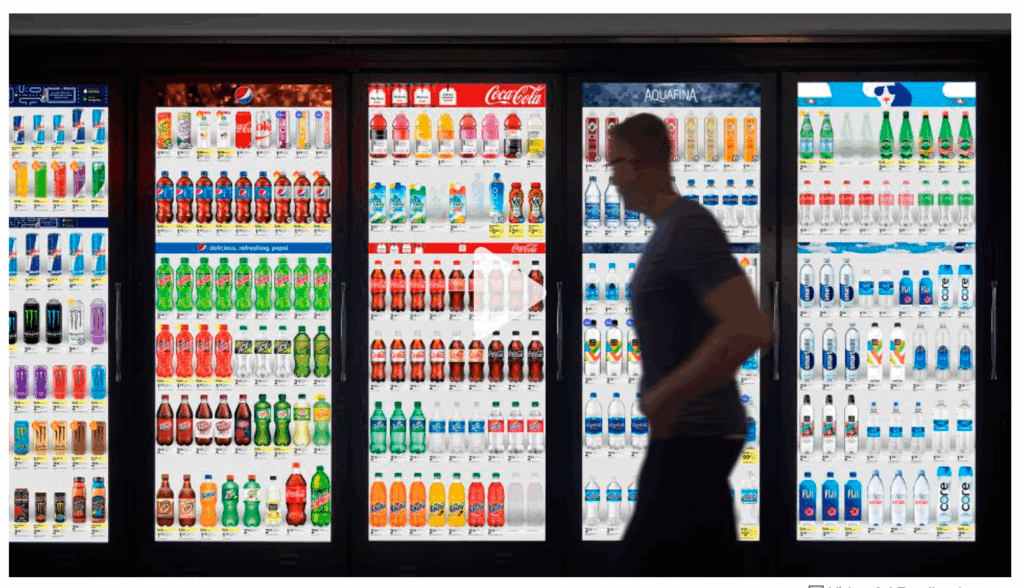
I was reminded of a comically bad decision by Walgreens to replace all their freezer doors with advertising screens…so you had to physically open up each door to see what was inside them:
Or, we can talk about the recent crash of AWS that caused Eight Sleep smart mattresses to overheat and get stuck in the wrong position.
Author Corey Doctorow recently published his book, Ensh*ttification, which explains how tech companies have made their products worse over time in search of more profit.
He’s mostly talking about social media, Amazon, and Google, but it can also explain why most products are getting worse:
- If some is good, MORE is better.
- If we complicate the hell out of it, it’ll seem more impressive.
- Once we get them hooked, we can make it worse and they can’t leave.
- Instead of doing one thing well, we can charge more if it does two things poorly.
Me yelling at my “smart fridge” reminded me of something I’ve really tried to prioritize lately…
My Fight for Simplicity
My friend Ramit Sethi has a saying that I’ve taken to heart over the past year:
“Fight for simplicity.”
I used to wear a Fitbit and Oura ring to track my sleep along with every other piece of data I could track. And then I started to get anxious if I was up at 2AM, and all I could think was “this is affecting my sleep score!,” which made me sleep even worse – the opposite of why I was tracking my sleep in the first place.
Now? I put my phone down and read a book and go to sleep. I try to get 7+ hours of sleep when I can. I don’t overanalyze because that leads me to getting more anxious.
I used to be an absolute maniac when it came to optimizing my travel: spreadsheets, rotating credit cards, chasing sign-up bonuses, etc. It was pretty much a part time job for years. (Though, it did pay for my trip around the world, so I think that’s okay!).
These days, I want simplicity. Business expenses go on one Chase credit card. Personal expenses go on a Citi credit card. Done.
My workouts used to be complicated. It involved lots of movements, and required a pretty strict schedule! And yep, it worked…for a while. But these days my priorities are different. My workouts are now much simpler. Squats. Deadlifts. Push-ups. Pull-ups. Dips. Handstands.
I used to track every calorie. But after years of tracking, I have backed off needing that level of specificity. I know roughly how much I eat for 90% of my meals. I know I can make a few small changes whenever the scale moves too far in one direction or the other.
I used to have a complicated task management system. Every part of my calendar was timeblocked. Everything got captured in a specific project management system. It would zap one thing from one column to another.
I got overwhelmed and stopped using it entirely. So I fought for simplicity and now use a manual to-do notebook.
My schedule is much simpler too: no more time blocking. Mornings are for writing, afternoons are for meetings and the rest of responsibilities.
“Simple and resilient” over “optimized and fragile”
Everything is now “smart,” which comically makes everything work less well.
QR code menus at restaurants, wifi-enabled coffee machines, refrigerators with TVs on them, Smart TVs with buggy software loaded down with ads…
The more complex a system, the more moving parts it has, the more fragile it is, the less resilient it is in an unpredictable world, the more likely it is to break down.
There’s this other theory called “planned obsolescelence:” by making things more complicated and technologically advanced, they often break down sooner (and can’t be repaired simply)…which requires us to buy new ones!
(It’s why our new appliances might break after a few years, but our parents’ old appliances still work decades later.)
This is why we should fight for simplicity, both with our dollars and within our own personal lives.
Fighting for simplicity is so important because “simple” does not mean “easy.” We can save our energy and effort for the toughest part of the equation: actually DOING THE THING.
Where can you say no, or be fine with “simple,” or do less:
Instead of building out a complicated email management system, can you do a little addition by subtraction: unsubscribe from all those company newsletters (except this one, of course)?
Instead of building out ways to filter and sort and manage all aspects of life…can we learn to say NO in the first place, eliminating the need to manage all of it?
Instead of buying the more expensive model with all the features you don’t need, can you go with the simpler option?
Instead of seeking out “the best” or the “most optimized” workout, can you just focus on the simple workout that you’ll actually do consistently?
How can you fight for simplicity this week? What can you confidently say “no” to?
It might be the only way you actually do the thing!
-Steve