(This essay is also published on my Substack)
FUN ANNOUNCEMENT: my new book How to Try Again was just named an instant National Bestseller!
Last week was one of the most fun weeks of my life – I have never felt more supported, and I allowed myself to enjoy every moment of it.
Thanks for being a part of it. We did pretty damn good!
Amazon is currently offering How to Try Again for 30% off, if you want to jump on the best-selling bandwagon! I’d love to have you.
On to today’s essay about starting ugly (a concept I detail in How to Try Again…)
In 1973, a young writer-director, fresh off the unexpected success of his previous film, began work on his next script.
Every morning at 8 a.m., he would sit at his desk with a goal of writing five pages. He’d usually have one page done by 4 p.m., and then panic-write the final four pages over the next hour.
What was he working on?
A movie about aliens.
After an ugly first draft left his film friends befuddled, he rewrote the movie and made some major changes. The updated screenplay involved a villain with a laser sword who was very strong in the ways of “the Bogan.”
When he asked another friend for feedback, the reply was: “This is absolute gobbledygook.”
You might not be a screenwriter, but “gobbledygook” isn’t quite the feedback you’re hoping for on a creative project. So what is this nonsense movie we’re talking about? Its working title was Adventures of the Starkiller! It was hopefully the first of many in a saga called The Star Wars.
Fortunately for us nerds, George Lucas kept at it, and after multiple rewrites, the screenplay started to take shape. By the time he wrote his third and fourth drafts, Luke Skywalker entered the story; Darth Vader, Chewie, Leia, and Obi-Wan all became fully realized.
And the rest is Star Wars history.*
*Okay. Actually, all sorts of things went wrong. Multiple studios passed on it and most couldn’t understand what the film was about (including most of the British crew and some of the actors on set!). The first winter rain in fifty years in Tunisia delayed the production almost immediately, and Lucas became so stressed out from the production he suffered anxiety attacks.
The fact that this movie ever got made is a miracle.
Furthermore, Lucas parted ways with the film’s original editor halfway through the editing process and brought in a new team (including Lucas’s then-wife Marcia Lucas) that gave us the film we saw on screen and won our hearts.
The more I studied screenplays and movies and origin stories, the more I uncovered comically bad first drafts and bizarre working titles.
- The working title for Ridley Scott’s genre-defining Alien was Star Beast.
- The original title for Pixar’s WALL-E? Trash Planet.
- One producer wanted to rename Back to the Future “Space Men from Pluto.” Great Scott, that’s terrible!
After a few months of working thinking about “starting ugly,” I found a kindred spirit. Author and artist David duChemin and his book Start Ugly, where he shares a delightful truth:
“Everything starts ugly. We sure did. Look, I love babies as much as the next person, but they arrive looking like little squawking lizards covered in yogurt and jam.”
We all have to start somewhere. The scariest thing of all is to start with nothing (okay spiders are the scariest, but then this).
Which means we need to first be willing to do something poorly, because that’s the only way we can then make it better:
- We can’t write a great screenplay without first writing a draft that’s described as “gobbledygook.”
- We can’t play the violin beautifully without first making it sound like an asthmatic cat.
- We can’t become a gourmet chef if we first don’t burn a meal or two or ten.
Once we start ugly, who knows where that might lead us.
We don’t know where starting ugly might lead
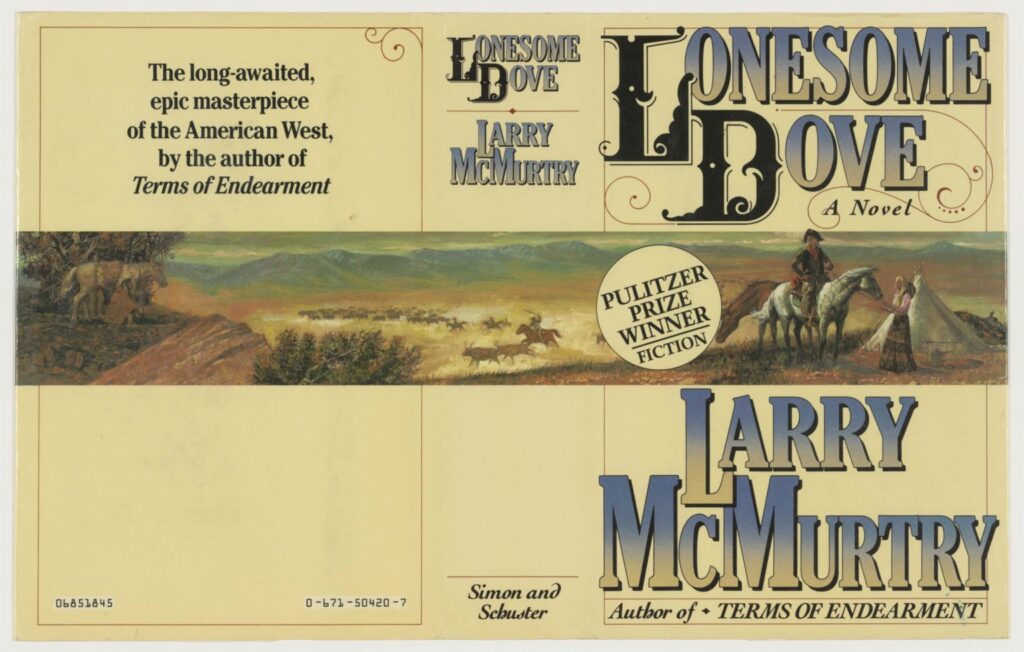
I’m currently rereading Lonesome Dove, one of the greatest novels of all time.
It won the 1986 Pulitzer Prize for fiction, sold four million copies, spawned an award winning mini-series, and vaulted its author Larry McMurty into the pantheon of all-time great epic/western/ Americana authors.
Heck, I joined my friend Brett McKay’s bookclub just so I could read it again this summer.
So when I cracked open my physical copy for a reread, I found myself deeply inspired within one page. Not by the story itself, but by the preface.
In it, McMurtry talks about how Lonesome Dove came together and has exceeded all of his wildest expectations:
In 1975, at home in my house in Texas, I peated out this:
“WHEN AUGUSTUS CAME OUT ON THE PORCH THE BLUE PIGS WERE EATING A RATTLESNAKE—NOT A VERY BIG ONE.”
Once the blue pigs and the remnants of the rattlesnake had been sashed away I devote a few sentences to Augustus’s partner, Captain Woodrow Call, who is in a nearby corral, trying to break an unruly young mare called the Hell B****, who catches him slightly off guard and takes a bite out of his shoulder.
I was not considering literary ranking or even literary merit when I wrote that first sentence about Augustus McCrae, the blue pigs and the quickly consumed snake.
I was just doodling at the typewriter, hoping to find a subject or a character that might hold my interest.
“Just doodling at the typewriter…” led to a Pulitzer Prize and literary immortality.*
*Yes he also is an incredible writer, has written thirty novels, luck plays a role, blah blah blah. But you get the point I’m trying to make here!
Maybe we don’t need to put more pressure and expectations on our shoulders when starting something new.
We’re not launching rockets here or conducting open heart surgery here. We’re trying to write something or paint something or play something or do something that we’ve never done before. That’s it.
This is exciting, because everything amazing was once a “doodle on a typewriter.” Of course, everything not-amazing was also a “doodle on a typewriter” too. But we cannot know until we start the doodle process!
Side note: this is easily the most times I’ve typed “doodle” in a newsletter (so far).
We need less worrying, less expectation setting, and more doodling:
- We can’t set out to write the great American novel; that’s probably the best way to never start in the first place. We need to doodle at the typewriter.
- We can’t set out to paint a masterpiece, that’s how we end up never picking up a paintbrush. We need to slop some paint on the canvas.
- We can’t set out to write a hit song, that’s how we end up writing a song for nobody. We need to strum some chords until we find a combo that makes us feel something different.
After all, maybe this part, NOW, when we’re not good at it and there’s a lot of mystery?
This might be the most enjoyable, fulfilling part.
Want to get the first chapter of my book, How to Try Again? Subscribe to my newsletter and I’ll send it over:
What if starting ugly is the fun part?
Trying can be scary. Being seen trying is downright terrifying.
And yet, in some situations…trying and being bad at something, in public, is the fun part.
On a recent episode of Working it Out with Mike Birbiglia, comedian Taylor Tomlinson (who also appears in How to Try Again) said something that caught me off guard.
She was talking about how much she loves the moment AFTER recording a stand-up special. She’s done that specific routine so many times, it’s so polished and successful that there’s no fear or excitement anymore:
This is my least favorite part, putting out the special. It’s still fun, but it’s the worst part of the whole process.
The best part is right after you’re done promoting the thing you did, and now you have to start over with nothing, and just go up [on stage], and be like ‘Is this something? Anything? Chuckle? Okay!’
She talks about how that first part of building the ugly hour of comedy, one awkwardly told joke at a time, is what lights her up. Eventually, the act becomes so routine that she’s on autopilot and the mystery is gone.
What a complete reframe for trying new things:
Rather than thinking of the early stages of a new activity as a “necessary evil” or an awkward part to get through quickly, it’s so fun hearing about a profession in which they talk about how the awkward beginning is the most fulfilling part.
For somebody that both loves standup and does not enjoy public speaking, but always feels invigorated walking off a stage, I get it.
We want to feel alive and push the boundaries of our comfort zone to experience “flow.”
For comedians, it’s when they don’t know if a joke will land that’s the exciting part. Which is the ugly beginning followed by “Is this anything?” I love that.
Start Ugly, Get Good
Anything worth doing is probably worth doing poorly at the start.
Whatever we try, eventually we’ll look back on our early efforts with embarrassment.
That’s actually a great sign: It means we cared enough and got better at it.
- We can’t write Star Wars without first writing a draft that’s described as “gobbledygook.”
- We can’t write a great book if we’re focused on becoming a pullitzer-prize winner.
- Maybe we don’t need to fast-forward through the
I wonder if there’s a place you can give yourself permission to start ugly.
Do some wonky push-ups. Make bad music. Go for an awkward run.
Maybe we can reframe things where the possibility of learning something new and being bad at at is actually the fun part? We can’t get good unless we start.
We’re not failures if it doesn’t work.
We’re humans who fail at things.
We can build on that.
What’s something you can start ugly today?
-Steve
PS: If you enjoyed this essay, I have a hunch you’ll love How to Try Again. “Starting Ugly” comes from my book.