(This essay is also published on Substack)
Matt Johnson and Jay McCarroll filmed the wrong movie.
In 2023, fresh off the film-festival buzz and success with Johnson’s wildly underrated film Blackberry, he had secured funding to film the third season of their web series turned TV show, “nirvanna [sic] the band the show.”
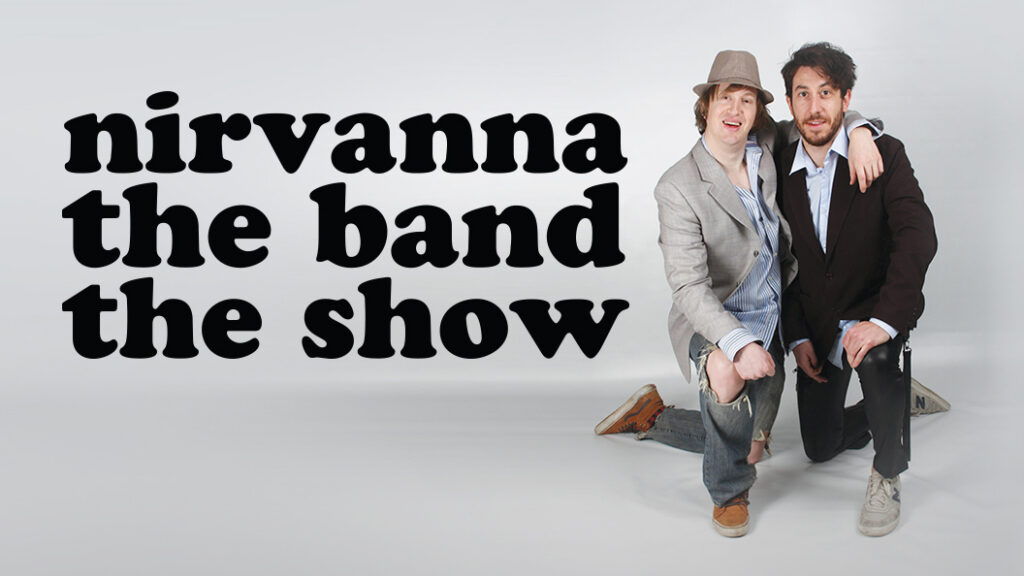
(Yes, it’s the weirdest show title maybe ever.)
Ultimately, they decided to pivot and make a feature film instead.
Johnson and McCarroll conceived a roadtrip-buddy movie that was a parody of A Confederacy of Dunces mixed with The Talented Mr. Ripley.
They bought an RV. They drove across America. They filmed the entire movie. They edited it. They returned to specific locations to re-shoot scenes.
And then they realized they had filmed the wrong movie.
They admitted to themselves that they had the wrong concept, with the wrong process, and went all the way back to “square one.” They scrapped the project and began anew.
We’ll come back to Matt and Jay with the results of their entire “reshoot,” but I can certainly relate to working on the wrong project.
The only reason you’re reading this essay is because my first idea failed at two major inflection points in my life. And I’m proud of myself for all the wasted effort.
It’s one of the most important parts of any project worth doing.
We can’t know if something is good until after we’ve done it.
The band OK Go has made some of the most inventive music videos for the last 20 years.
For me, my love affair with their creativity began with their famous Treadmill dancing video:
My favorite is probably their Rube Goldberg-inspired video for “This Too Shall Pass,” where I’m probably 1 million of the 77 million views:
The members of OK Go treat their music videos like performance art, which often requires months of prep, practice, and production.
In a delightful “behind the scenes” mini-doc, OK Go’s Damian Kulash talks about how ideas never arrive fully formed, and only by going through the creative process itself can the best possible version of those ideas reveal themselves:
Kulash talks about how they spent a month on one specific idea for their video to create a few seconds of footage only to realize they didn’t like it, and how important that step is.
Of course, nobody loves this part (chasing dead ends), but it’s at the heart of every single creative project and can only come through experimentation and honesty:
“You know what’s just as important as figuring out the ideas you do like?
Figuring out the ideas you don’t like. And that means putting a ton of time and effort into ideas that are just gonna be dead ends.
…If you want your project to be great, you have to be ruthlessly honest with yourself when the ideas are less than great.”
Sometimes, we need to spend a lot of time on a thing to know that’s the thing we don’t want to do. It’s part of the process. It requires courage and kindness for ourselves. We’re a different person now, with knowledge that will never be forgotten.
As Kulash explains, “The end result was nothing like what I originally imagined, but what I originally imagined was just a starting point. To get to something we loved, we had to spend all this time figuring out what we didn’t love.”
It takes 40 gallons of sap to make 1 gallon of maple syrup
Ed Catmull, cofounder of Pixar, explains in his book Creativity, Inc. how their movies are pretty terrible when they get started. that’s the point. They start with rough cut of an idea that might work, and it’s the team’s job to take them from “suck to not suck.”
In other words, they’re not afraid to “start ugly.”
Pixar creators star with storyboard images based on the rough script, and then they add temp voices and music to make a “reel” (a crude mockup). Each 90-minute reel requires around 12,000 storyboards.
Twelve. Thousand.
This rough “reel” is shown to Pixar’s “Brain Trust” (trusted creatives within Pixar’s organization) who try to figure out what’s working and not working and what needs to be scrapped completely, and then they do this all over again.
This process is repeated every 3-6 months, creating over 100,000+ storyboards, until they reach a reel that “works,” and then they do the Pixar magic of bringing it to life.
Let’s use Pixar’s award-winning Up as an example.
Director Pete Docter first envisioned a movie about two spoiled princes in a floating castle who fell down to earth. The Brain Trust couldn’t relate to the princes and struggled to understand the rules of the floating castle.
The next version kept two things from the first pass – a floating dwelling and a funny bird – but now included an old man named Carl.
This means almost all of the original version was chucked. Storyboards, music, voice overs. All gone. It was in the third version that the trip to Venezuela was added, and in the fourth version Docter finally nailed the message and the plot.
And yet, this is all part of the process for Pixar. Up had to go through these changes and incorporate feedback to uncover the groundbreaking final version of the film that makes us laugh and cry.
Pixar films are always a “best first guess.”
Sometimes, their guesses are way off, and much of their work must be discarded. From Pixar’s perspective, though, that’s simply the cost of trying new things. They don’t know their final destination, so they “get in the neighborhood” and explore a few roads, even if some of those roads require them to turn back.
Their creative teams are often creating 10+ times the length of a film to find the parts that work. None of this can be shortcutted or optimized away. They know that all of this is helpful knowledge and useful information that will help inform future trips.
Catmull shares a story about how they tried to streamline this process in the past, or get the story locked before any expensive production began, but that made for a worse finished product:
Making the process better, easier, and cheaper is an important aspiration, something we continually work on—but it is not the goal.
Making something great is the goal.
Pixar’s work might result in 10x the storyboards that is pared down to the final story, but this ratio can be even more lopsided in other creative endeavors.
SDPB Radio’s Jackie Hendry asked Ken Burns about his American Buffalo documentary.
She asked about the process of distilling thousands of years of history into the 4 most important hours of footage, and his reply is the most New-England thing I’ve ever heard:
“I live in New Hampshire and we collect maple syrup here, and to make it, you have to have 40 gallons of sap to make one gallon of syrup.
And I would say that the kind of documentary filmmaking that we do is not dissimilar from that 40:1 ratio.”
In other words, for every forty minutes of filmed/documented footage, one minute makes it into the final footage. Burns needs a lot of footage, and interviews, and research and attempts, and work, to give him enough material to distill it down to the most important hours on that subject.
As Burns says, “That’s the essence of what it is.”
(Want to read the first chapter of my bestselling book? Sign up below and I’ll send it over!)
We stand on the shoulders of our past failures.
As somebody who has more than my share of false starts and dead ends, I’m quite thankful for two of them.
In 2008, I had an idea to start a blog chasing one of my passions. I set up a website, I stayed up late, I spent weeks writing, and published essay after essay after essay. It was a music blog that I was so damn excited about.
I then came to a frustrating realization: “This sucks!”
Weeks and months of effort and brain power wasted. So I pivoted.
I had this other idea that I was thinking about: helping nerds get fit. I took everything that I had learned about my music blog, and now free of the burden of trying to make that idea work, I could freely dive into my new idea with all the knowledge I had already gained.
And that worked out pretty well! NerdFitness.com became my life’s work for 15 years, helping tens of thousands of people get fit and have fun along the way. Nerd Fitness is still going strong, serving the fine nerds of the Rebellion.
And then I had another successful failure more recently.
Four years ago, I set out to write a book. I spent months on a book proposal about a specific type of book. And then I sent it to my book agent. His reply “oooof, this isn’t it. What other ideas do you have?”
And then, on January 1st, I sent him a few sentences of my next idea:
“How about a book for that moment after we fail at our New Year’s resolution?”
It was my previous idea with 80% stripped out, and a larger focus on the 20% that worked.
The result of that “restart” is my national bestselling book, How to Try Again.
(Thanks for letting me wedge this in here!).
I also probably wrote 250,000 words that were distilled, like sap into syrup, over 3.5 years into the 70,000 words that are on bookshelves around the world today.
All of that “wasted effort” created the end result I’m so proud of.
Which brings me to you, dear reader.
Most of life is a “best first guess” followed by feedback (internal and external), and then an adjustment. This is how we end up in new, interesting places.
- We might start writing historical fiction about the staff at an English castle, only to realize that our test readers aren’t loving it. We can pivot a few details and turn it into time-traveling romantasy.
- We might start making instructional videos about physics, but realize we have much more fun when we make videos nerding out about Magic: The Gathering.
- We might go to the gym expecting to get toned in a cardio class, but discover that we love feeling strong when we pick up heavy weights. Cool! Chase it!
Where can you give yourself permission to embrace more wasted effort today?
Our past attempts, wasted efforts, and dead-ends, all create the material we need for future success. We stand on the shoulders of Past Us.
We’ve learned exactly what doesn’t work for us. IT can free us up to work to work on the next idea that might be the right one.
So what happened with Matt Johnson and Jay McCarroll?
The second version of their movie, Nirvanna the Band the Show the Movie won multiple film-festival awards, critical acclaim, and is The Big Picture’s Sean Fennessey‘s favorite 2026 film so far.
It also had me laughing my ass off:
(Oh, and as Johnson told Sean Fennessey on The Big Picture, they plan on finding a use for that first version of the movie in a future season of their show.)
Jay and Matt had the courage to listen to themselves and accept that their first version wasn’t good enough. OK Go spends months working on creative projects to discover what they don’t like. Pixar reminds themselves that their job isn’t to streamline the process, but to make the best film possible.
Maybe we can give ourselves a break when we “waste effort” on the wrong thing.
Knowledge gained through failure is still knowledge.
We never “go back to square one.”
It all counts.
-Steve
My bestselling book, How to Try Again, is now available in bookstores worldwide!
Visit HowToTryAgain.com for more details, book bonuses, and international editions.
You can also follow me on most platforms (SteveKamb) for more bite-sized bad jokes and wisdom: