I love the idea of optimizing and maximizing as much of life as possible.
If being productive is good, then being more productive is better.
If I’m buying anything, then I must use my decades of research experience to make sure I buy the best possible version.
If I want to watch a show, I first have to check all the other streaming platforms first to make sure there isn’t a better show I could be watching.
(Of course, by the time I finish this process, I am too tired to watch that first show.)
Which brings me to today.
I got a chance to read an early copy of my friend David Epstein’s new book Inside The Box (out this week).
He makes a convincing argument that not only can we be happier with fewer choices and less freedom, but it’s the fact that we have so many choices and freedom that cause good chunk of our dissatisfaction.
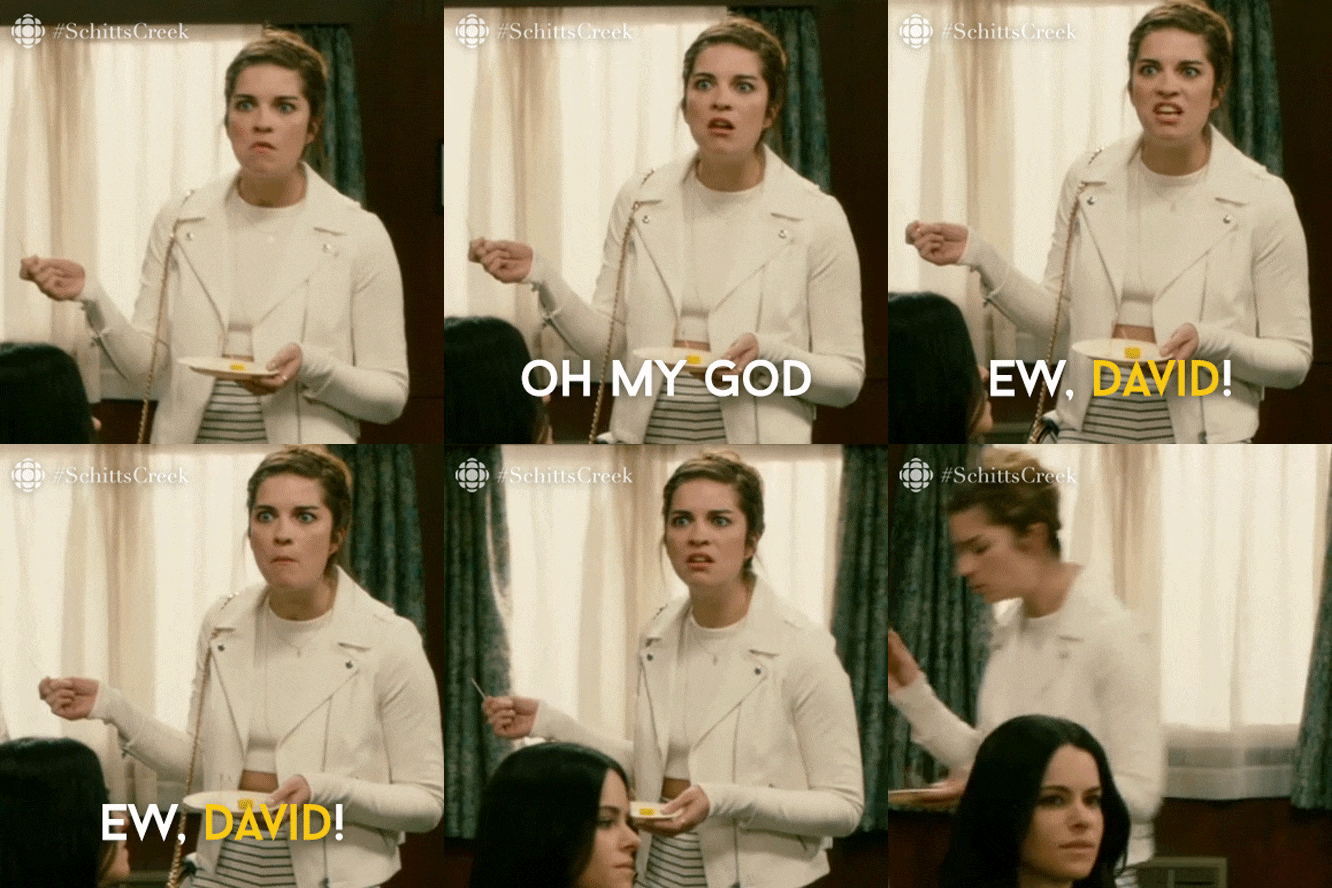
If you’re like me, the voice in your head might saying the following to David:
Fortunately, David’s book is full of deep research and fascinating stories about inventors, scientists, musicians, and writers, and it convinced the hell out of me.
I bet it convinces you too.
We have more choice than ever, and it’s making us less happy
Here in the United States, we don’t just like “more.”
We love more.
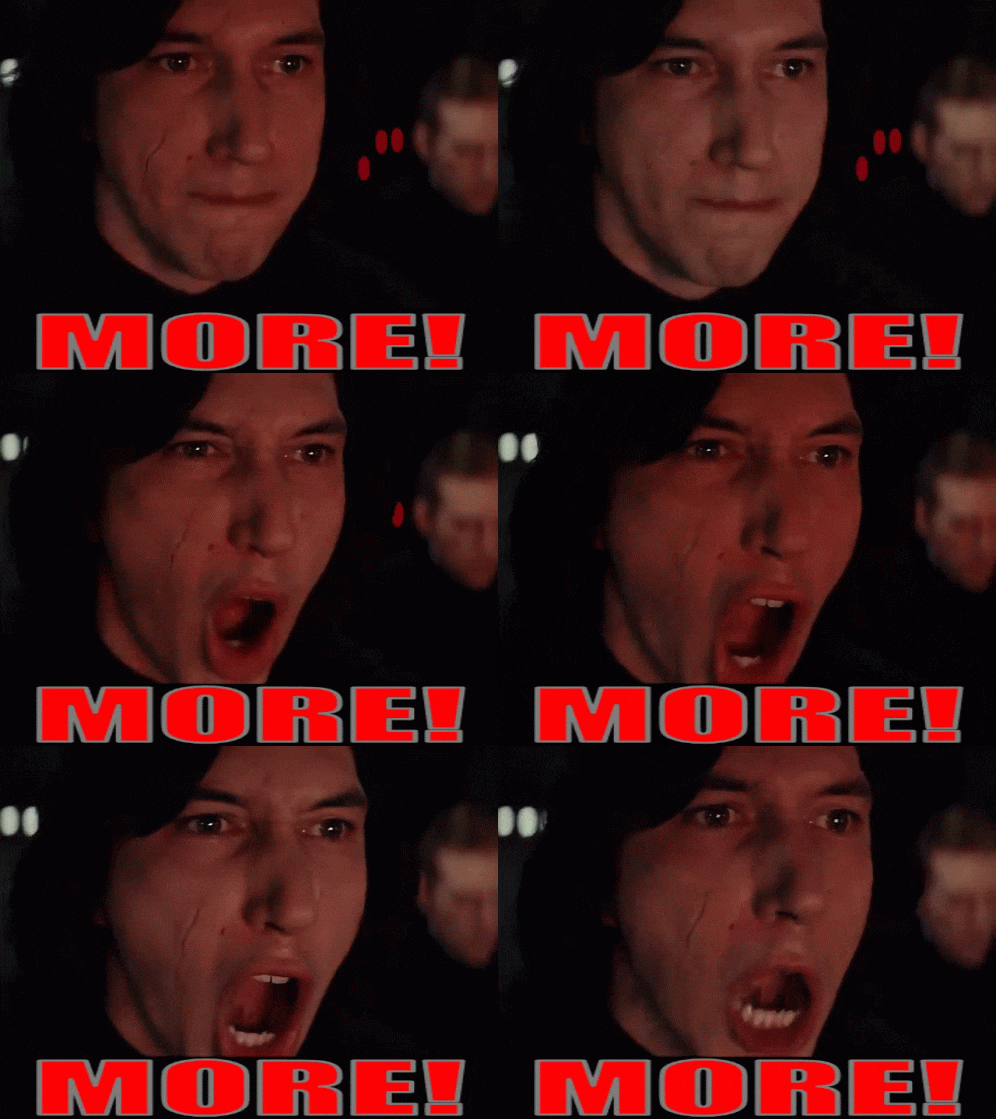
And we love that we have choices for everything:
5,000 types of toothpaste, infinite products on Amazon, unlimited access to every song ever created, instant entertainment we can access at any moment, and the opportunity to compare ourselves at any point to 8 billion other people.
With so many choices available, it’s only natural that we spend as much time as necessary to ensure we choose the best option too, right?
This is best demonstrated in Master of None, when Aziz Ansari spends all day researching the best tacos in town:
Like Aziz’s character, having access to all of this choice and the ability to research every choice feels great. Imagine eating the third best tacos in town? The horror!
There’s just one problem.
All of these choices are making us less satisfied with any choice we make.
David’s book points out how access to infinite choice really affects us, backed by reams of research. He refers to people who must maximize every choice:
“Maximizers are less satisfied with their decisions and their lives, less optimistic, less happy, more prone to regret, and more likely to endlessly compare themselves to others.”
(Or, in the case of that Master of None scene above, Maximizers spend so much time researching the best tacos that the taco stand is closed by the time they finally decide!)
Infinite options means we can always wonder if we made the best possible choice, which makes us less satisfied with whatever choice we did make.
Author’s note: I haven’t even touched on the topic of dating, because that requires its own essay.
But there’s a reason everybody on dating apps complains about being on dating apps: each person is just one swipe away from an possibly even better match, who is better looking, or funnier, or an even better soul mate!
Back to the problem with optimizing in a world of infinite choices:
Epstein shares a quote from scientist Henry Simon who spent 50+ years studhing decision-making:
“True maximizing is impossible anyway, and ‘searching for the best can only dissipate scarce cognitive resources.’”
So, what do we do?
We should just make choices more quickly, and then reverse them if we think we made a wrong decision, right? That’ll make us happier?
Wrong again!
The joy of “satisficing”
There’s a reason Amazon offers free refunds on products, and it’s not because it’s necessarily better for us, the consumer.
It’s because decades of research and billions of dollars and data analysis of billions of transactions have determined that giving us the option of “free returns” gets us to buy more stuff, independent of whether or not we’re more satisfied with our purchases.
In fact, we’re probably more likely to be dissatisfied with any choice made, because an alternative, potentially better choice could still be out there:
“In studies of choice, people understandably report a preference for reversible decisions and yet usually end up more satisfied when decisions are irreversible.
Even when [reversing a decision] isn’t used, just the ability to reverse a decision can contribute to dissatisfaction.
Maximizers particularly value the ability to reverse a decision, which can leave them less satisfied as they continue to deliberate on a choice even after it’s made.”
(This is me. I am world-class at debating with myself about each and every decision, even after it’s been made. And it makes me miserable!)
So how can we remove ourselves from this prison?
When we stop chasing the best, we end up more satisfied because we have accepted reality. We become satisficers who can find fulfillment with “good enough:”
“It’s not that relative satisficers have low standards; they can have high standards. It’s that they have standards at all other than “best imaginable,” so they create the possibility of satisfaction with their choices”

I’m reminded of an essay (that I couldn’t find after an hour of searching), where the writer shares a story of a fun night out at a below-average concert. A commenter pretentiously replied “boy, you are easily entertained, aren’t you.”
The author’s reply was delightful:
“Try being easily entertained.”
Today’s mission: make the less-optimized choice
You might be thinking, “Okay fine Steve, your friend David has me convinced. But how do I do this in practice?”
We can be more like the aforementioned Henry Simon:
“[Simon] didn’t agonize over keeping his options open.
When he had to make a decision, he considered a few alternatives, sometimes solicited advice, chose, and then remained open to lessons but not to dwelling on regret.
‘I was never aware that he changed his mind or re-thought options after deciding on something,’ [his daughter Katherine] wrote. ‘Once made, his decision stuck.’
Simon knew maximizing was unrealistic, and so he eagerly satisficed, saving anxiety and cognitive bandwidth anywhere he could.”
Here’s what that might look like in practice:
We can be aware of “Fredkin’s paradox”, as David says: “the notion that the more similar our options, the less choosing between them matters, but the harder choosing between them is. Thus, we are likely to spend the most energy on the least-important decisions.”
We can practice setting a “minimum acceptable threshold,” and then be making a choice that’s simply “good enough.”
We can reclaim our time from endless research, reclaim the anxiety from second guessing our choices, and save that time and energy for more important things:
We can remember that an afternoon spent eating the third-best tacos in town is still an amazing day.
I’ll leave you with a final quote from Inside the Box:
“It is OK to be satisfied. In a world of enormous choice, in fact, it is critical for well-being.
As Simon pointed out, if we counted the cost in time and energy of evaluating options, we would see that satisficing actually is the maximizing.”
If you want to discuss this post and share what you’re satisficing on, you can do so over on my Substack republish!
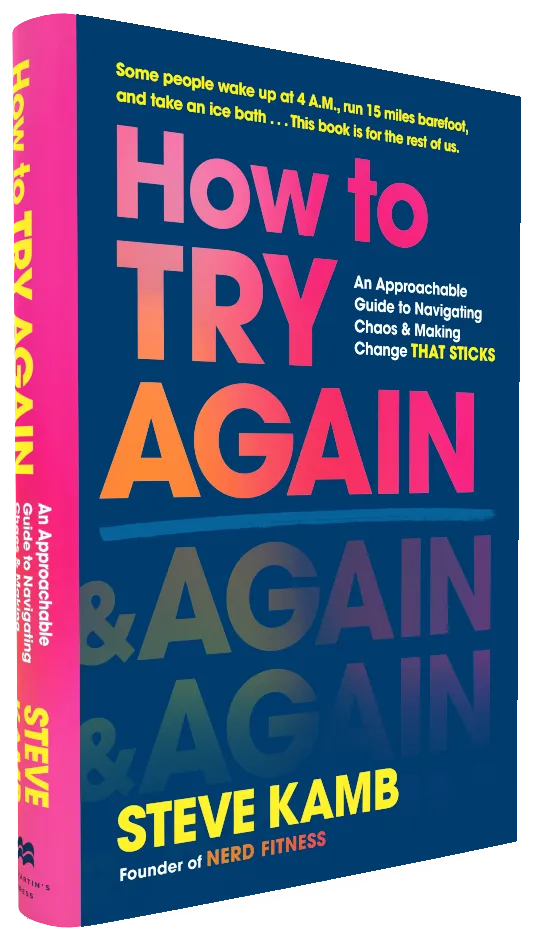
“How to Try Again” corner – 40 days til launch!
The reason this essay is two days late is also David’s fault.
I wanted to wait until Inside the Box was available (so I was going to publish Tuesday), but I also challenged myself to write an essay with constraints: a singular focus.
I ended up writing a very very long essay about infinite choice and too much freedom, but that broke this new constraint I had placed on myself.
So, I spent an extra two days tightening and rewriting, and saved the other half for a future essay.
Speaking of writing, I’m hard at work getting ready to do a bigger “official” announcement for my upcoming book, and I have had a jam-packed week of pre-recording podcasts, doing my updated workouts, and gearing up for a fun kick-off launch announcement soon.
That means there will not be an essay next week (the week of May 11th).
(But I imagine I’ll be posting dumb things to distract myself on Threads, Instagram, and Substack notes if you are there!)
I’ll be back with a big email and fun announcement on May 18th, one month out from my own book launch!
And now if you’ll excuse me, I have some pretty good tacos to eat without regret.
-Steve (former maximizer, current satisficer)
PS: I really loved Inside the Box, and would recommend it to anyone interested in making better decisions and wanting to challenge themselves artistically or creatively.
David is one of my favorite writers, and this book is another delightful, thought-provoking adventure.