This is also published on Substack.
This essay is an excerpt from my upcoming book How to Try Again (out next week!)
Every day, we’re bombarded with yet another miracle solution to all our problems: a new supplement, workout trend, or optimized morning routine.
How the heck do we decide? And once we decide, what if something better comes along?
Fortunately, I’m going to go over a filtering strategy we can apply to every future book, product, diet, video, or podcast we stumble across in our quest to live healthier or happier.
When our brain tells us to get overly excited and chase the shiny new object, when we’re suddenly faced with conflicting lifestyle choices from two equally charismatic influencers, we need a personal philosophy that helps us decide confidently while ignoring the hype and noise.
Life will always be busy and there will always be a new fancy-pants strategy begging for our attention (and our hard-earned money).
Welp, I have good news and bad news.
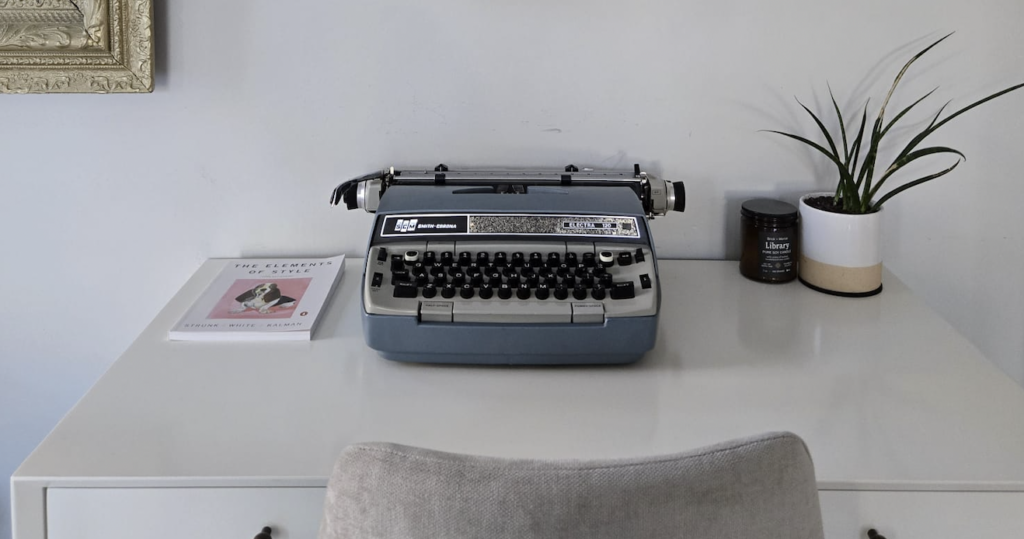
Neal Stephenson is the best-selling author of some of the best science fiction novels ever written.
I remember stumbling across an essay he wrote, “Why I Am a Bad Correspondent,” where he explained why he was unavailable to reply to every email and attend every engagement he gets invited to.
Writing novels is hard, and requires vast, unbroken slabs of time. Four quiet hours is a resource that I can put to good use. Two slabs of time, each two hours long, might add up to the same four hours, but are not nearly as productive as an unbroken four.
. . . The productivity equation is a non-linear one, in other words.
Aspiring authors might read that and think, “I need four hours of unbroken time or I will never get my writing done.” If you’re a new parent, you work a full-time job, and you suddenly find yourself caring for an ailing parent, you might lose hope and say, “I’ll never find the time to write my sci-fi novel!”
All right, let’s look at another writing strategy.
Ian Fleming was a former British Naval Intelligence officer and author of the James Bond novels.
Each winter, Fleming would fly to Jamaica and stay at his private oceanfront compound, Goldeneye (yep, that’s where the Pierce Brosnan Bond film got its name!).
There he followed a strict routine:
He would wake up at sunrise, and write each morning from 9 a.m. to noon on a gold-plated typewriter. He would swim, lunch, nap, and then edit from 4 p.m. to 6 p.m. before crushing cocktails.
This was done like clockwork each winter.
The result was twelve novels and two short stories in fourteen years.
What, you don’t have a private Jamaican compound or a gold-plated typewriter? AND you have a family and a child with special needs and a job and other responsibilities? Oh well, I guess that’s the end of your ambition.
Okay, fine, let me share one more example.
Agatha Christie is the author of sixty- six detective novels and fifteen short story collections that have sold two billion copies worldwide.
This is slightly more copies than I have sold (so far). When asked how she was able to write so prolifically, one would imagine a situation like Neal Stephenson: a dedicated, quiet workspace and a completely empty calendar with large blocks of uninterrupted time.
Her response will surprise you.
As she shared in Agatha Christie: An Autobiography:
I was enjoying myself so much in ordinary living that writing was a task which I performed in spells and bursts.
I never had a definite place which was my room or where I retired specially to write. . . Many friends have said to me, “I never know when you write your books, because I’ve never seen you writing, or even seen you go away to write.”
I must behave rather as dogs do when they retire with a bone; they depart in a secretive manner and you do not see them again for an odd half hour.
Yep, this is the exact opposite strategy from Stephenson and Fleming. Yet she still somehow wrote dozens of incredibly fun and successful books in this manner.
So, which of these tactics is best?
Which one creates optimal results?
Nearly all strategies will work. . . for the right person.
Each author discovered a routine and style that worked for them. Any one of them would flounder if they tried to follow the writing routine of the other.
Personally, I would struggle to get any writing done if I lived on a private Jamaican compound with the Caribbean outside the window. I even asked my publisher to buy me a Jamaican writing compound for testing purposes (they said no, immediately).
We need to find the system that fits our weird life and constraints.
Whether it’s a writing strategy, a morning routine, a workout or diet, a painting technique, or learning how to talk to strangers, most strategies will probably work…
If we actually do them. And that’s where people get in trouble.
Let’s not chase a strategy that creates the “optimal” results. Instead, let’s pick a strategy that we can follow pretty consistently, most of the time, for a long time:
- The best diet is the one we actually stick with.
- The best time to work out is when we can actually work out.
- The best parenting style is the one that works for us and our family.
Many people search for the optimal strategy without ever bothering to ask, “Do I see myself actually following through with this?”
Things like eating food, exercising, and trying to make positive changes in our lives are all lifelong experiments.
We can’t really “cram” for them like a test and then be “done.”
Permanent progress requires permanent change, which means we need to pick changes that we can actually stick with for months, years, or decades.
Making small changes to our how we eat regularly (eating one less snack per day and adding more fruit to our diet) will create slower progress than crash dieting and giving up carbs for a month. But it might be something we can actually stick with for years, because it allows us the freedom to eat fast food without guilt when it’s our weekend with the kids.
If we write a few hundred words each morning before the kids wake up, it will take longer to write a book than if we move to a cabin in the woods and drink enough caffeine to levitate. But it’s more likely to result in us building a long- term writing habit that fits into our hectic life.
Also, I’ve seen enough horror movies to be wary of cabins in the woods.
The most optimal, the fastest, or the most efficient solution might be the one we quickly abandon because it makes us miserable. If we can’t wait to be done with our new diet, then it’s not the diet for us. If we are counting down the days until we don’t have to go to boot-camp class, it’s not the style of exercise for us!
There are an infinite number of paths to make progress on whatever experiment we choose, but it does require us to compassionately accept the constraints of our life. If we can keep our focus on what’s important to us, if we can accept that there’s no magic solution that will solve our problems, we can learn to put our efforts toward stuff that actually works… for us.
This is an excerpt from Chapter 6 of my book, How to Try Again, which comes out next week!
“HOW TO TRY AGAIN” CORNER – 8 days to Go!
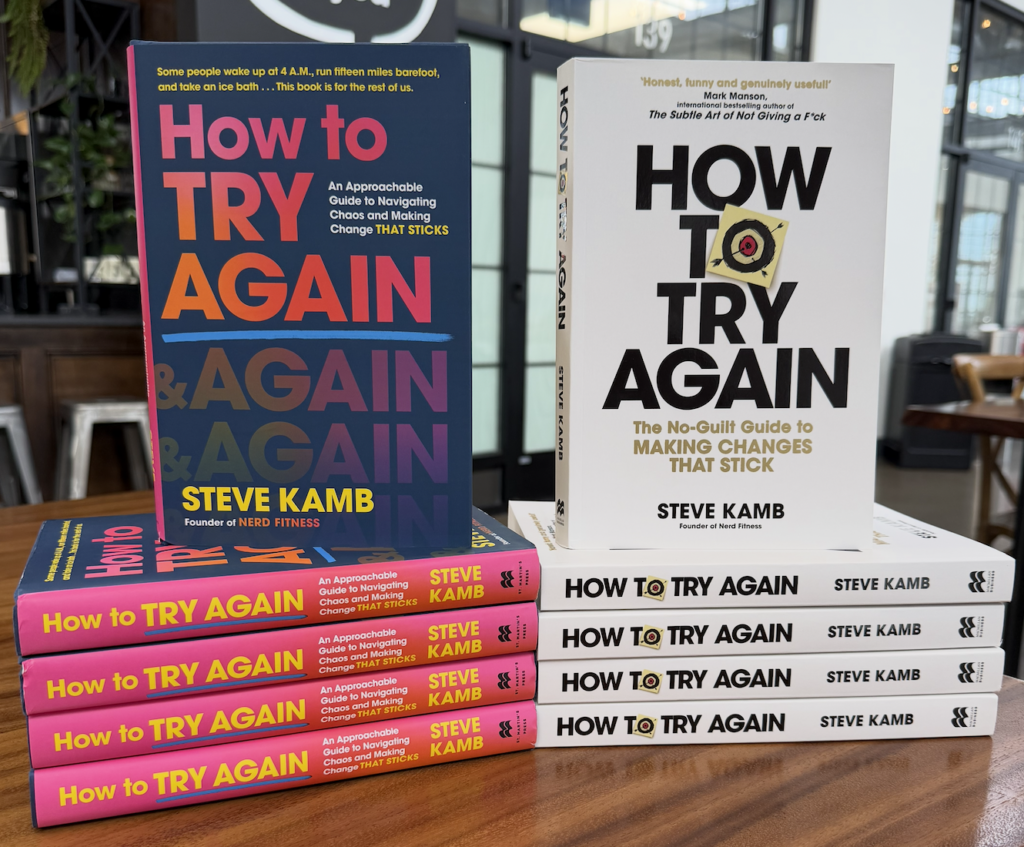
In case you missed it last week, here’s a fun side by side of the US cover and the UK Covers (which I just posted about on Instagram):
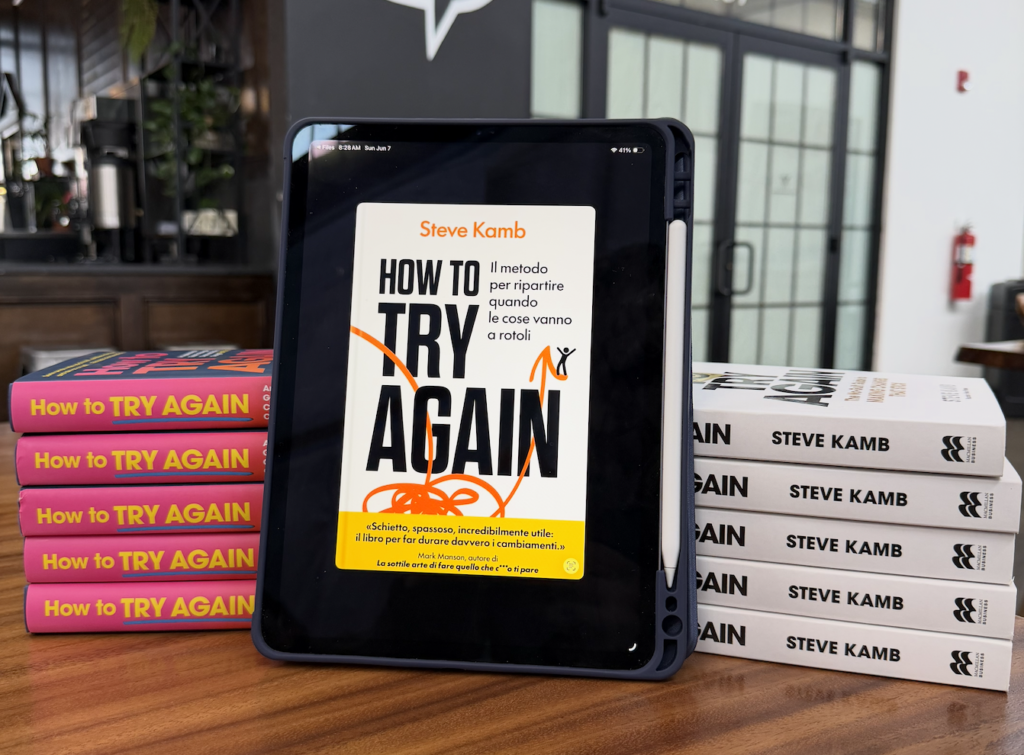
Oh, and here’s the Italian cover (HOW COOL IS THAT!?). I’m already referring to this cover as “Chaos Pasta” and it makes me happy.
We’re 8 days away from publish date! Single digits! Loud noises!
I am giddy and nervous and excited.
Please consider pre-ordering your copy in whatever version (audiobook, digital, or physical) from whichever country so your copy can arrive as soon as the book is released, my publisher is happy, I’m happy, you’re happy.
Everybody wins!
-Steve
PS: You can comment on this post over on my Substack!