Crap. I’m crying in the coffee shop again.
Admittedly, this happens with some regularity, when I’m moved to tears by a song or movie or book that hits me in the heart.
Okay, it also happens every time I accidentally stumble across the video of that old guy who finds his dog Jorge who was lost for three years and living on the street. Instant waterworks, every time.
(Yes I just teared up again. Damnit Jorgie!)
So, what caused the tears this time?
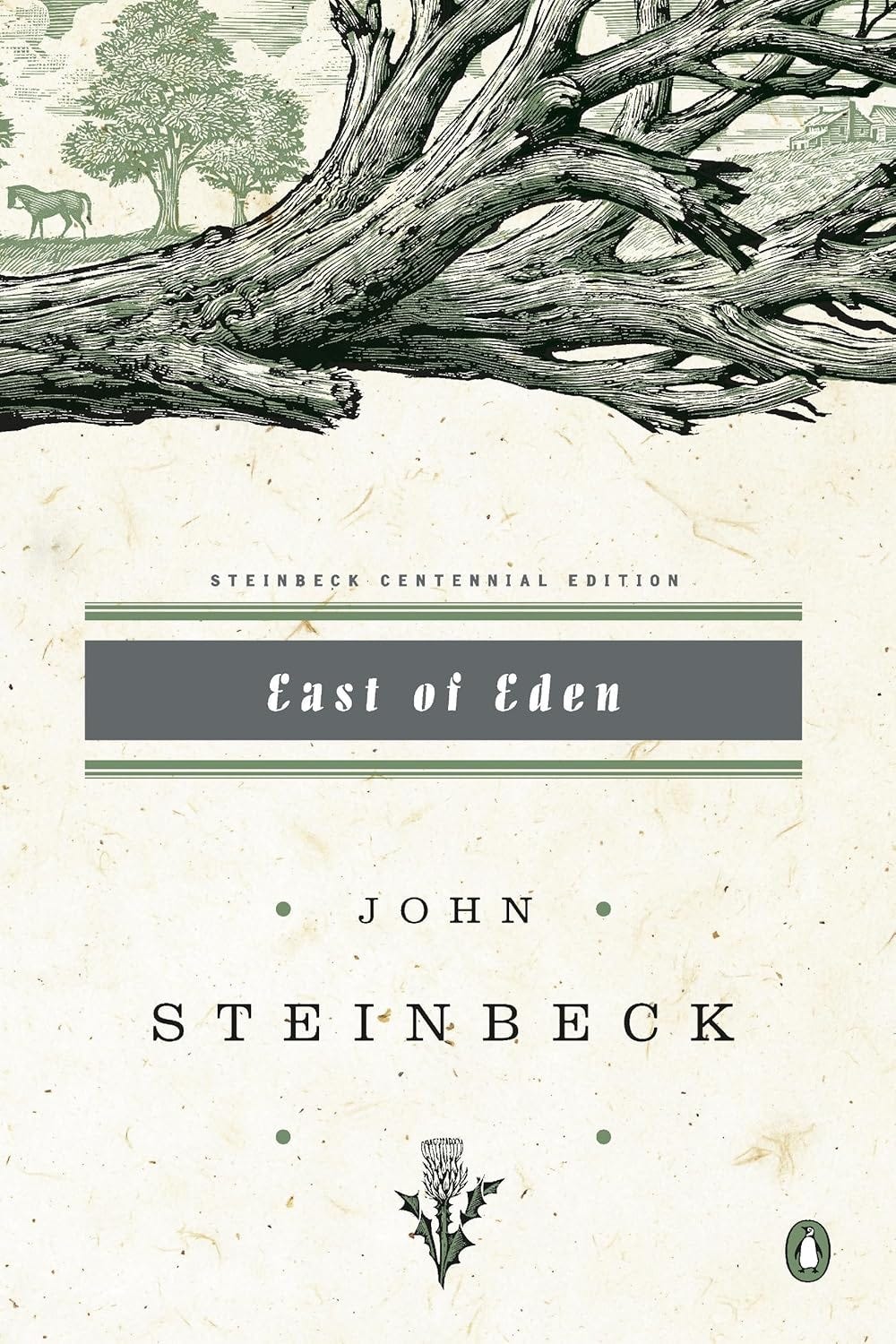
I was finishing John Steinbeck’s sprawling epic, East of Eden. 595 pages into its 600 page-length, I read a sentence that I’ve heard and read dozens of times before all over the internet.
So, why did it break me this time? Context.
I didn’t have the history of the line, I didn’t go on the journey previously. And that made all the difference.
I’ll get to the line shortly.
But first… some context.
(This is what we in the business call a “cliffhanger.”)
CliffsNotes and Context
We can ask ChatGPT to summarize the most important lessons from Pride & Prejudice or the main themes of War & Peace. We can grab the Kindle highlights of Siddartha, and use Wikipedia to plot Andre Agassi’s tennis career instead of reading Open.
To borrow from Dr. Ian Malcom, just because we can doesn’t mean we should.
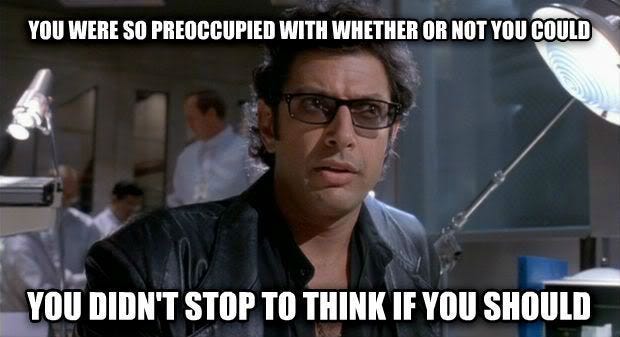
Something gets lost when we only get the summary, when we grab the quote without context, when we ask the computers to do the heavy lifting for us.
(Personally, I’m deeply concerned with where A.I. is taking us).
FTX founder (currently serving jail time for fraud, conspiracy, and money laundering) Sam Bankman-Fried once told a reporter:
“I don’t want to say no book is ever worth reading, but I actually do believe something pretty close to that. …
If you wrote a book, you f—ed up, and it should have been a six-paragraph blog post.”
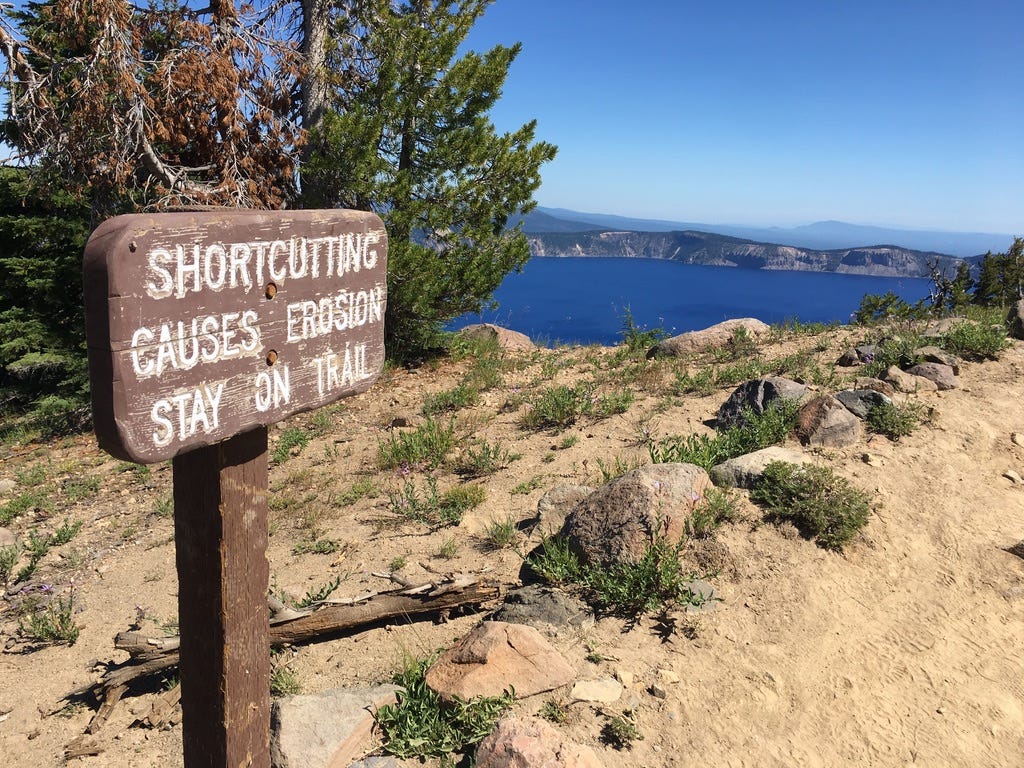
I assume Bankman-Fried was talking about nonfiction books, but I bring up his quote to make a point. Context matters. The shortcut might give us the answer, but if we don’t understand why it’s the answer, we might draw the wrong conclusion or create a sense of understanding we don’t actually have.
This reminded of this sign from Crater Lake I saw on a hike back in 2018:
Which brings me back around to writing.
When we just read a quote from a book, we might miss the important part.
The story that precedes the sentence that ends up as a tweet. The humanity and all its complexities that cannot be neatly summarized. The character’s inner thoughts, the author’s deepest insecurities and struggles laid bare. The time and place and geography that creates the space for the character to take the action.
We finally arrive at the line from East of Eden that broke me:
“And now that you don’t have to be perfect, you can be good.”
I probably saw this quote posted by some motivational account years ago on Twitter (before Twitter turned into a cesspool) and thought it was brilliant. I assumed Steinbeck was talking about overcoming perfectionism to make imperfect progress. “Perfect” was the enemy of good. Et cetera. Making good progress today was better than waiting for perfection tomorrow.
And sure, that’s a great lesson to learn… but that wasn’t what the quote meant.
It turns out the quote is far deeper than that, and for that I owe Mr. Steinbeck an apology.
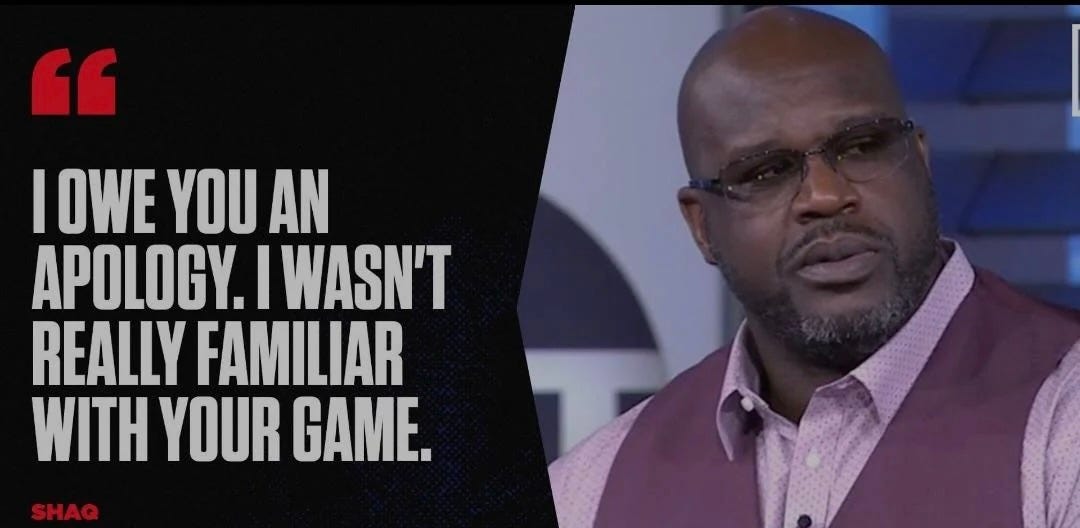
I didn’t have the full context of why the sentence appeared in this book, and that context is necessary to truly understand how brilliant and humanity-defining those thirteen words are.
Thanks for reading! Subscribe for free to receive new posts and get the first chapter of my book free.
Perfect expectations, pedestals, and being good
Quick note: yes, I see the comical irony in providing the context instead saying “read the 600 page book yourself,” but I can’t not write about it.
Maybe this will give you the nudge you need to finally tackle East of Eden as well. It’s brilliant and thought provoking and worthy of every accolade it’s earned.
Onward!
97% of the way through this 600-page sprawling epic, after following a multi-generational family across the country, learning their complicated pasts and histories, navigating intertwining storylines and absorbing their deepest fears and dreams and hopes…
I read those 12 words, and they hit very differently.
*(Minor spoiler alert for a book that came out in 1952)*
A character named Lee is speaking with a young woman named Abra about the end of her recent relationship with Aron, a boy she had known for much of her young life. In that relationship, Aron had created a romanticized version of her in his mind. A perfect, clean, angelic Abra that wasn’t grounded in reality. A version that she – nor any human on earth – couldn’t possibly live up to. As a result of this, she felt connected to him. She felt less than, because he was in love with the idea of her rather than in love with her.
After that relationship ended, Abra didn’t feel sadness as much as she felt relief.
She could stop feeling “less than.” She could stop comparing herself to the fake version that didn’t exist. She could stop chastising herself for not being a perfect person like Aron had imagined.
Instead, she could just be okay with being good.
With this full context, this quote hit me like a sack of hammers*.
*I have never been hit by a sack of hammers, but I can imagine it’s quite jarring. So let’s stick with the metaphorical hammers and the real tears for now.
When I say I’m a recovering “insecure overachiever,” I mean it. Perfect As in grade school. I think I had one B in high school. I was class president, Homecoming King, and graduated second in my class. I was the captain of one sports team and an all-star on another. I never missed a curfew or got in trouble.
When I started Nerd Fitness and people started to follow my story and my writing, this obsession with perfection and overachieving started to crawl back in. Nobody put this pressure on me, but I think my brain plus the online, public persona created a tough combination.
Steve Rogers, aka Captain America, became the person I modeled myself after.
I was also a nerd named Steve who always did the right thing. I was the “rebel leader” of the Nerd Fitness Rebellion. I felt like every single movement or action I took was under a microscope. I had to be perfect so that I could motivate others to also strive for more. I gave compassion to others, but really struggled to give myself an ounce.
I assumed I had to be “the golden boy.” The inspiration the community needed. I cared a lot about what other people thought of me. I deeply considered every action I took, how I carried myself, what version of me I showed the world.
(By the way, I don’t believe others put this pressure on me. My parents didn’t. Neither did my friends. I don’t think the NF community did either. I put this pressure on myself.)
Carrying this level of expectation drove me to greater and greater success, until it didn’t.
I burned out. I got overwhelmed with the spotlight and developed pretty severe anxiety. I had to take massive steps back from my company and the community. I then went through an amicable but heartbreaking divorce and shrunk even further from the world.
While all this was happening, the voice in my brain shifted into in overdrive with one resounding message: if I couldn’t show the world “Perfect Steve,” then the only option was to hide completely.
I still had things I wanted to say. I still wanted to help others.
Fortunately, I eventually realized the world hadn’t ended because I wasn’t perfect. I wasn’t a failure because things didn’t work out. I was simply a regular human who had failed at things.
Welcome to the club, Steve.
I had burned myself out trying to live up to what I thought everybody thought of me. It took me a long time to realize most people would prefer the real version of me, complete with my insecurities and struggles and failures.
And now that I didn’t have to be perfect, maybe I could be good.
I told the world about my struggles and the things that didn’t go the way I had expected. The challenges I faced personally and professionally. I even found the courage, 15 drafts in, to put those failures on the 2nd page of my book.
Sharing this initially scared the absolute sh** out of me.
I readied myself for the judgment of the universe… the opposite happened. I got hundreds upon hundreds of emails of support, stories from others who were also struggling, who thanked me for making them feel less alone.
One reply in particular put the biggest smile on my face. A reader mentioned how they were surprised that I had gone through so many challenges and failed quite a bit. They said it was like finding out “Captain America had a therapist.” And more importantly, that made things okay for them to also be a mortal human.
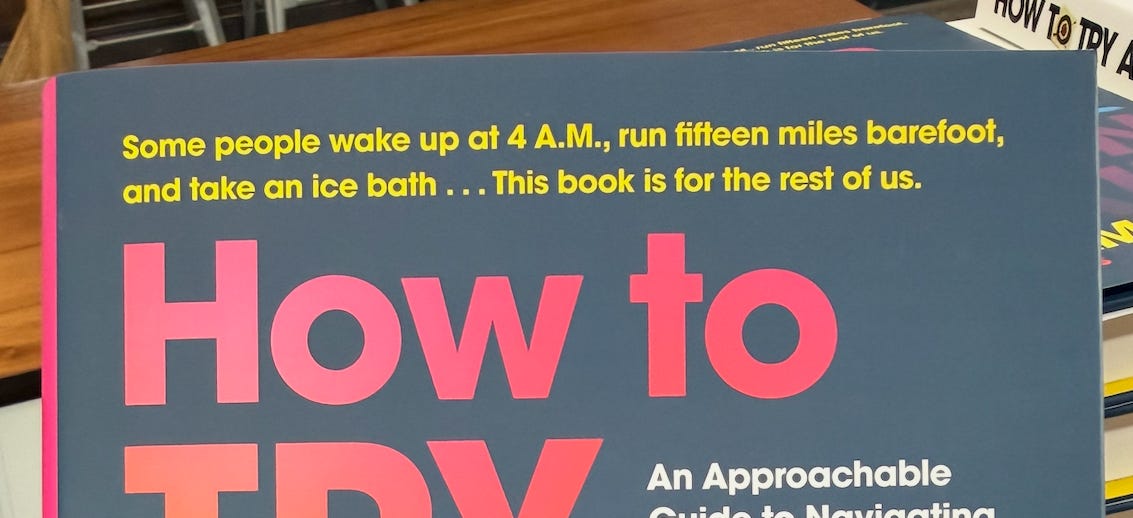
This is why I wrote the book I did.
I didn’t want to write a book for the people chasing perfection. I wanted to write a book for those who are tired of feeling less than, and hope to find acceptance in just being good.
Here’s another thing I realized in reading Steinbeck’s quote with the full context:
I can see a lot of my younger self in Abra’s boyfriend, Aron.
As a teenager, I didn’t just hold myself to an impossibly high standard, but I also held my relationships to impossibly high standards as well. I put girlfriends on a pedestal (very much like Aron). I’d develop an idealized, perfect, romanticized version of them in my head, and then inevitably feel let down when they couldn’t live up to that perfect expectation. I have compassion for young Steve, just like I have compassion for Aron. Life and love and loss and experience provided the lessons I needed to learn.
I’m glad I stopped holding myself and others to an expectation of perfection that’s impossible. I’m glad I discovered the beauty of imperfection. It helped get me through these last few years.
The sooner we can stop being perfect, the sooner we can accept each other for who we already are: fallible humans who are trying to get through the day, do some good, and be good.
I hope this context helps.
-Steve (no longer perfect, trying to be good)
PS: Speaking of humans and relationships…next week I’ll be speaking virtually at a really fun summit created by my friend Zack Arnold about humans connecting with other humans.
You can grab a free ticket (or pay to have all the talks I think) over at The Connection Conference. Check it out!