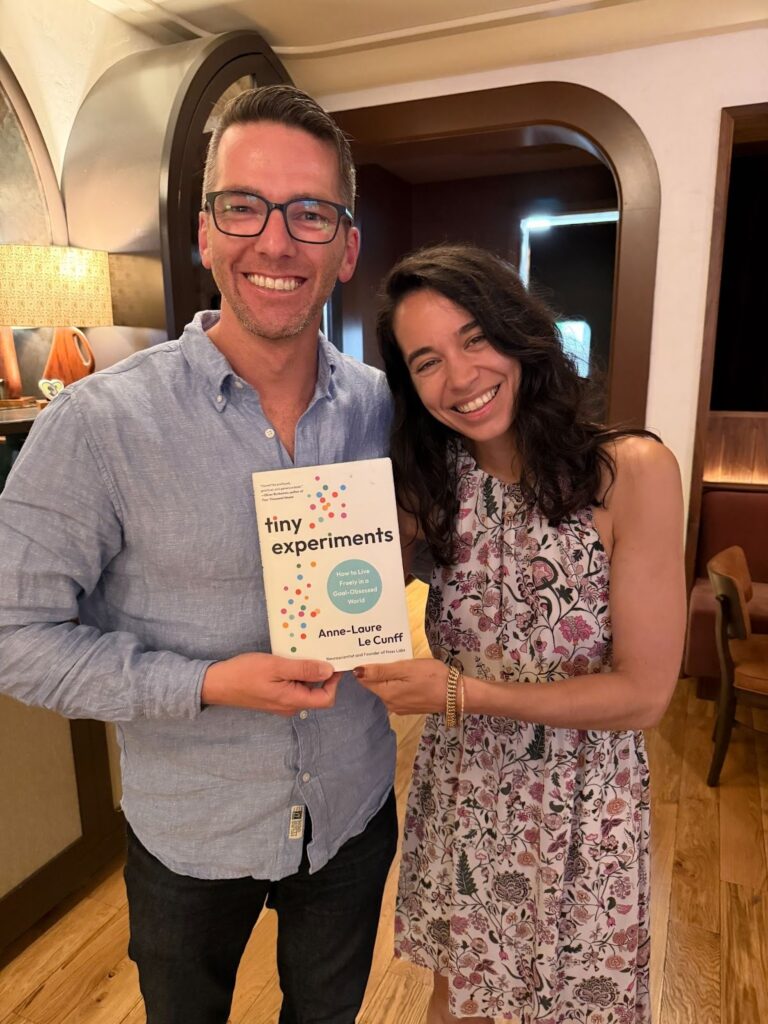
A few weeks ago, I had the pleasure of crossing paths with author and neuroscientist Anne-Laure Le Cunff when she visited Nashville to do her TEDx talk.
Le Cunff is the author of Tiny Experiments which I read last week. It’s delightful.
If you’ve been a fan of my writing or Nerd Fitness for a while, you know we love looking at life like a giant adventurous experiment, especially when we’re asking them to try something new and scary.
(One of my favorite success stories involves an experiment we did with client Megan).
I wanted to bring this idea of “life is an experiment” back around to the forefront, and issue you a challenge.
But first, some background. In order for us to start experimenting again, we need to go back in time.
We Are Born Curious
As Anne-Laure points out, we’re born as curious kids where every aspect of life is interesting:
“It’s in children’s nature to experiment and explore the unknown.
They learn first and foremost through movement, which is considered the foundational skill for developing emotional, cognitive, and social skills.”
I was a really curious kid with a love of adventure.
- I would conduct experiments at home for fun (so many baking soda volcanoes).
- I’d wake up early so that I could watch Mr. Wizard (who was kind of a jerk)
- My favorite class in school was science.
After an afternoon indoors playing The Legend of Zelda: A Link to the Past, my friend Cash and I would immediately go explore the backyard imagining it was the land of Hyrule.
Life was curious and interesting and the possibilities were endless.
But then like every other kid, I grew up. Life started to shrink a tiny bit. I started to become aware of my “place” in the world and how I could best conform.
I shifted away from “boundless curiosity” to “narrow determination.”
I started to listen to that voice in my head that said: “There’s no time for fun! I must do THIS THING, to get THAT THING, and then I will have THIS NEW THING, and that will make me happy! And then I can have fun.”
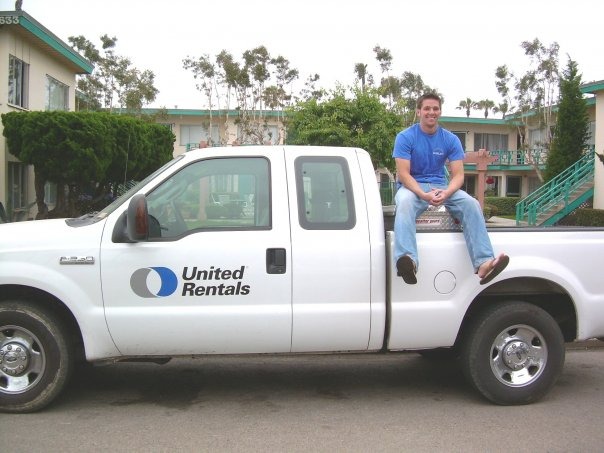
After college, I took a job I thought I should: sales!
I worked in construction equipment sales, which I was quite terrible at.
I would drive from job site to job site, try to sell a forklift or jackhammer, get rejected, and then sit in my truck and read Harry Potter (they had GPS trackers on our trucks, so I had to “be” at each job site for a certain amount of time. I know, dystopian as hell).
Because I disliked my day-to-day life so much, I escaped more and more into video games (at the time it was EverQuest 2 and Oblivion.)
It took an idea about helping nerds get fit, a career change, and a broken computer for me to get back to curiosity and experimentation.
This is how Nerd Fitness started: an idea, an experiment, and an enthusiastic curiosity for life that had been missing from my life.
I got back to living rather than existing.
It required me to ask myself some uncomfortable questions:
- How can I get myself to do stuff again instead of escaping into other people’s creations?
- Where am I narrowly focused on ONE path instead of seeing the possibilities?
- Where can I re-introduce curiosity, possibility, and enjoyment to my life?
This led to me turning my life into a video game and traveling around the world.
But then I “grew up” again.
Nerd Fitness accidentally became a thriving business, and those big goals started to creep back in…
How big goals almost sunk me
I’m a recovering “insecure overachiever.”
For as long as I can remember, I’ve felt driven to succeed and reach some arbitrary and far-off level of success so that I can finally feel worthy enough to hold that position.
As more people found Nerd Fitness, my idea of “success” grew larger too. It wasn’t about chasing my curiosities anymore, but rather growing a team and building a business and so on.
I was narrowly focused on reaching that specific success benchmark, even though it resulted in a life I wasn’t particularly excited to live.
I told myself I had a responsibility to go down this path.
(It never crossed my mind that I was terrible at managing people and not really doing the thing that I actually loved: writing about things that interest me.)
But also, as Anne-Laure explains in her book, this focus on external markers for success was really corrosive to my happiness:
“We tirelessly strive toward unattainable perfection, which not only stifles our curiosity but inevitably leads to disappointment when we fall short of our own unrealistic expectations.
Self-criticism becomes the default response to perceived failure.”
And boy am I good at “self-cricitism!”
Add in a heaping teaspoon of impostor syndrome and workaholic tendencies, and was a recipe for perpetual dissatisfaction. Blarg.
No matter how much “success” I had in any area of life, my brain found new, even more succesful people to compare myself to so that I never felt like I had “arrived.”
This is why I would randomly wake up at 4:30AM and think “I’m already behind today.”
In other moments, I would put so much pressure on my shoulders to achieve a specific outcome that it paralyzed me from taking action in the first place.
I’ve had to work hard on embracing acceptance and learn to start each day from a position of “I’m already enough.” I had to let go of the need for a specific outcome or success marker.
I’ve returned to the fun curiosity that led me to start Nerd Fitness in the first place.
I worked hard to let go of the need for a certain type of success and instead just focus on doing the things that bring me to life and make time slow down.
Writing this personal newsletter has helped. Forgiving myself for being human has helped. Reconnecting with you (via every newsletter reply), dear newsletter reader, has helped.
This is going to be my challenge for you today.
Tiny experiments over big goals
Let’s start with accepting reality:
We’re not kids anymore (as my lower back often reminds me!).
We have responsibilities and jobs and obligations and mental health work (and kids and families and friends).
However, maybe there’s a way to get those things done AND add some curiosity into our day-to-day lives too?
This is where we become scientists and create experiments instead of setting goals.
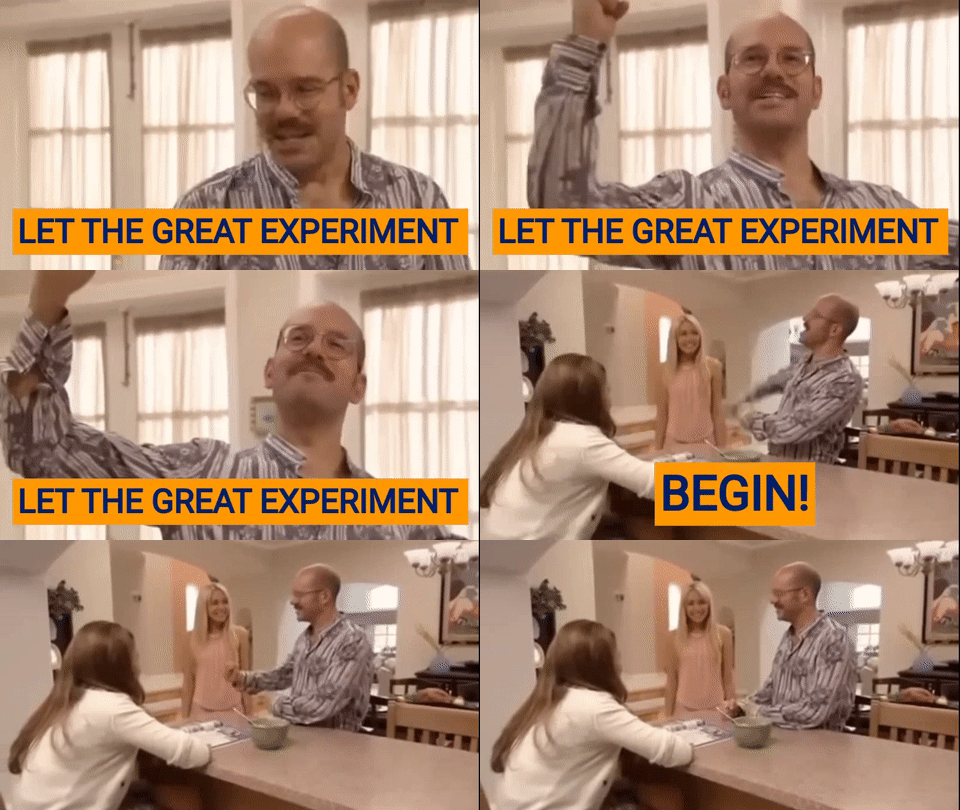
We can create tiny experiments that pique our curiosity and allow us to chase interests without the pressures of perfectionism, self-criticism, “I can’t be happy until I reach this goal.”
Rigid goals are OUT.
Tiny experiments are IN:
- We form a hypothesis for what we want to explore.
- We create an experiment that might work.
- We pick a variable to test.
- We set a time frame.
- We start..
And we do all of this without the pressure of a goal. We’re just trying an experiment to see if it works for us. It’s just a “test run” that we can decide if we want to keep doing it!
No matter the result of the experiment, it’s a win because we tried.
My Two Recent Experiments
Personally, I’m currently running an experiment on my Steve Kamb youtube channel: “What if this was fun?”
Is there a world in which Steve Kamb writes his fun newsletter (which you’re now reading), and also LOVES making occasional videos to reach new people or share fun stories?
There’s no pressure. There’s no specific outcome or goal.
Here’s the only way I’m tracking my experiment:
“Can I have fun making 20 videos?”
I had fun making a video about turning my broken mug into an art project:
I also put out a video about my favorite childhood book series.
(I’d be honored if you subscribed and followed along.)
I also did another tiny experiment this past weekend that was way less serious but involved cute animals.
I have been recently trying to find “20 seconds of courage” to start going to Yoga classes.
(I know, there’s a lot to unpack here: a guy that owns a fitness company who’s afraid to go to a fitness class…)
Fortunately, I found a nice “half-step” towards “Steve attends an official serious yoga class”:
Yoga with rescue puppies.
My hypothesis:
I can put my love towards a great cause and have a great day:
- Support the Nashville Humane Association
- Attend a yoga class
- Play with puppies
The result of this experiment: Yes, Yes, and Yes:

(Not to brag, but the puppies chose MY mat to poop and pee on.)
I want you to try a tiny experiment this week too.
What’s a tiny experiment you can run?
Right now, I feel like we could all probably use two things:
- More real-world activity
- Less smart phone use.
Inspired by Anne-Laure and Tiny Experiments, I have a mission for you:
Is there a tiny experiment you can run in your life too that gets you off your phone and out into the real world?
Tae some colored pencils and paper and start drawing…
Finally pick up that guitar and strum a few chords…
Sign up for that dance class…
Here’s the important part: the ONLY expectation you can have is, “I’m going to try something I wouldn’t have otherwise done?”
I want to hear from you:
What’s a tiny experiment you can try today, without an expectation of success or progress or improvement?
Something you can do just for the fun or curiosity of it?
-Steve
PS: Shout out to Anne-Laure: her Tiny Experiments and newsletter are both a breath of fresh air. Readers of this newsletter will enjoy both!