I was raised by two loving parents and a Nintendo.
I was also raised by PBS, the Public Broadcasting Service (which recently lost their federal funding, but luckily still endures).
A lot of my worldview can be traced back to Sesame Street, Reading Rainbow, and Mister Rogers.
Reading Rainbow furthered my love of reading books. I learned to count with The Count. I still laugh when I think of the “U really got a hold on me” skit. I think Oscar the Grouch often made some really good points. My family and I still joke about skits and sketches from Sesame Street 35 years later.
I learned about kindness, empathy, and support from Mister Rogers.
It’s no surprise that every time a terrible thing happens in the world (which we are all now aware of), the famous quote from Mister Rogers gets passed around:
“When I was a boy and I would see scary things in the news, my mother would say to me, ‘Look for the helpers. You will always find people who are helping.’”
This has always provided me comfort and given me hope in humanity. The brave people who run towards the danger. Who save others who need saving. Who protect those who need protecting. Who help those who need help.
This is what made this past weekend so heartbreaking.
When a VA emergency room nurse, whose final words were “are you okay?” to the woman he was trying to help, is shot repeatedly, and then called a “domestic terrorist” despite overwhelming evidence to the contrary, it’s impossible to not feel fear, shame, outrage, and anger.
He was the helper.
Now, there have been far better writers who have written far more eloquently about what transpired this past weekend and with previous travesties or disasters, and the people of Minnesota become more inspiring by the day. I am proud of the servicemen and servicewomen who continue to serve the people and do their best to help and do their duty.
I also know not every reader here is in the United States, another tragedy or problem will happen somewhere else tomorrow, and hopelessness is lurking around every corner.
That’s what hopelessness is banking on: an overwhelming onslaught of “bad” that causes people to give up.
Rather than debate the specific awfulness of any one individual event, I want to take a larger look at despair when chaos reigns, and see if we can apply some practical strategies to mount a resistance.
How to NOT solve despair
I don’t know how to solve despair…
But I definitely know how to NOT solve it:
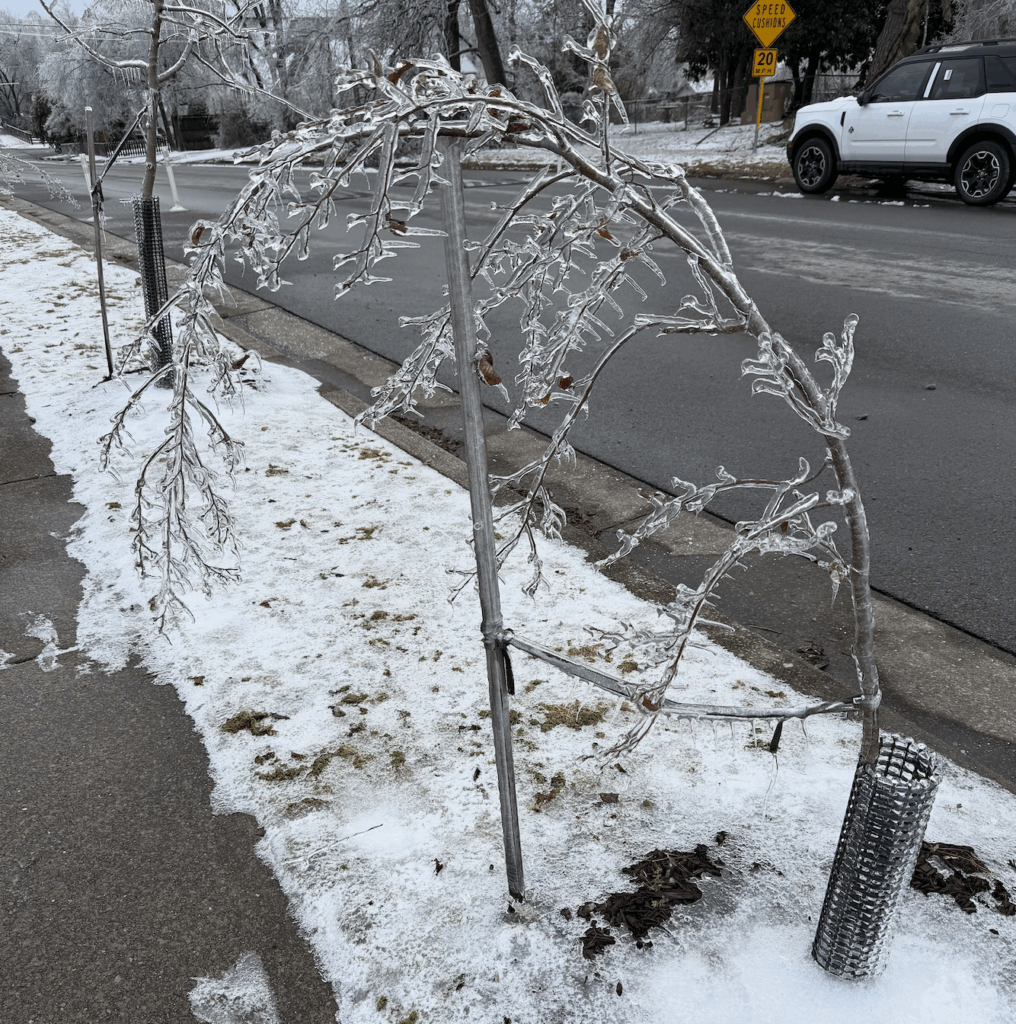
Like much of the eastern US, I was snowed/iced into my home for the last three days in Nashville. Stepping outside was dangerous, trees were falling by the hour, everything was iced over. This gave me three straight days of no human interaction, no exercise, and no sunlight.
I felt like how this tree looks:
At the same time, the app-blocking software on my computer and phone, which normally limits social media/news for me, didn’t update correctly.
As a result, I spent an unhealthy amount of time reading and following the ongoing tragedy in Minnesota.
In addition, I’ve become increasingly depressed at the denial of science when it comes to public health, in favor of performative changes and harmful repeals. I’m proud of my hard-working doctor and scientist friends, continuing to fight misinformation even as their research is gutted, their occupations are slandered, and their expertise is ignored.
Combine all of this plus being snowed/iced in, and the end result was an all-time low.
I know some will say “Wake up, Steve. People in power have always done awful things” or “what about XYZ tragedy to [marginalized group].” or “what about what’s happening to [other cause].” I understand and agree, but hope you’ll stick with me as I make my larger point.
Last night, I woke up in the middle of the night full of despair for the future.
Although I’ve tried to be kinder to myself lately, I got upset for not taking care of myself, not writing, and not doing much of anything other than mainlining outrage. I reminded myself we’re all “Receivers of Memory” and it’s destroying us. We’re not equipped to handle “the worst thing that happened on Earth” every day. It’s too much.
So, that’s definitely not the solution. I also have a pretty good guess that these following strategies aren’t creating a positive result either:
It’s not jumping from one outrage to the next, every day, spreading ourselves so thin that we make no progress on any cause ever. Nor is it saying “well what about XYZ tragedy instead?,” nor picking fights for hours with bad-faith actors, bots, and/or people who have no interest in changing their minds.
It’s not getting angry at anybody that doesn’t have the exact correct amount of outrage, on the correct timeline, for a specific cause. It’s not shaming those who don’t do enough, or are focused on a different cause. Everybody is fighting their own battle, deep in their own lives, and doing what’s best for their situation.
So, if those aren’t the answers…
How do we not get demoralized into inaction?
How do we fight back against nihilism?
We must create hope for ourselves
My personal best guess is inspired by the following quote from author F. Scott Fitzgerald:
“The test of a first-rate intelligence is the ability to hold two opposed ideas in the mind at the same time, and still retain the ability to function.
One should, for example, be able to see that things are hopeless and yet be determined to make them otherwise.”
This is how I feel right now: hopeless and yet determined to make things otherwise.
I’m going to create hope for myself, and through my writing help others create hope for themselves. I know I must be mentally healthy, lean into my strengths, and “not let the b*stards grind me down,” as my grandfather once told me.
Like Author John Green says, hope is not just a feeling. It’s a decision and a feeling. Hope needs to become a practice.
This sentiment is echoed powerfully by musician Nick Cave:
“Hopefulness is not a neutral position — it is adversarial. It is the warrior emotion that can lay waste to cynicism. Each redemptive or loving act, as small as you like [can help].”
Like characters in a role-playing game or D&D campaign, we all have strengths and weaknesses and lives and jobs and families and challenges and health problems. We have to still put on our oxygen mask first. And I think we all have a part to play.
I wrote an essay about “Creating Hope” last year, and leveraging Dr. James Griffiths’ “Hope modules” to combat despair and take action.
Here’s how I think those things can apply to the next travesty or atrocity or disaster, when despair is high and nihilism is knocking on the door:
Pick a cause or two that is important to you, that you can directly impact. If you have causes that are important to you and you can contribute to their cause, do so. I’ve been fortunate in my life, and as a result I’m able to donate regularly to a number of local or national causes that are important to me: PBS, dog shelters (Wags N’ Walks and Nashville Humane Org), local food banks (Second Harvest), and investigative journalism (ProPublica). You get to pick the causes that speak to you. I promise you they appreciate your support!
Help people around you. Be the helper Mr. Rogers was talking about. When the world feels overwhelming, taking a single action can keep despair at bay. Volunteering with our time, if able, can be a powerful step to keeping nihilism at bay. Helping others creates hope. In the immortal words of the show Shoresy: “If you don’t know where to go, go where you’re needed.” My neighbor, who I had just met 48 hours earlier, walked over to my house yesterday to check on me during the storm. Simple unexpected kindnesses can go a long way, especially during chaos.
Look for beauty, create art, spread hope. One of psychologist Carl Jung’s 5 tenants of happiness talks about the importance of “seeing beauty in art and nature.” When I see beautiful nature documentaries, when I observe incredible artwork or photography, when I hear stories of humans doing amazing things (like the Ocean Cleanup Project, or the reforestation project), when I see videos of appreciative dogs being rescued, my hope meter fills up. Humans have committed atrocities since our first day on this planet, but we’re also capable of incredible kindness, change, and beauty too. Be aspirational with your social media choices too: my algorithm is dogs being rescued, art, and people saving the planet.
Take care of yourself: We can’t help others if we don’t take care of ourselves. One of Dr. Griffith’s hope modules involves “emotional regulation.” This means taking care of ourselves. Whether it’s building a LEGO set, gardening, meditating, journaling, drawing, putting down the phone, watching a movie, calling a friend, hugging a family member, etc. Resting and recharging is an important part of regenerating hope. Having a “nourishment toolkit” can be really helpful. I ignored all of this over the past few days and I’m not surprised my hope meter was empty.
Tell the truth and stay safe. I love the writer Anne Lamott, and have found her words comforting over the past few weeks: “Obviously we stay nonviolent, we show up, tell the truth; we stand in the streets peacefully with signs, hold people accountable, and still protect ourselves the best we can. We do this one day at a time—rest is a sacred act. You don’t want the evil to overwhelm you. But we keep going. We never give up on Goodness, on Grace batting last.”
Avoid performative fighting. This essay on performative vs helpful activism provided an interesting perspective. Social media is both a powerful amplifier and organizational tool, and yet also a cesspit of despair. I know it’s so much harder than just saying so, but really stepping back and asking if your social media time is being spent productively (if that’s the goal), or if it’s having a net negative impact on your cause or efforts.
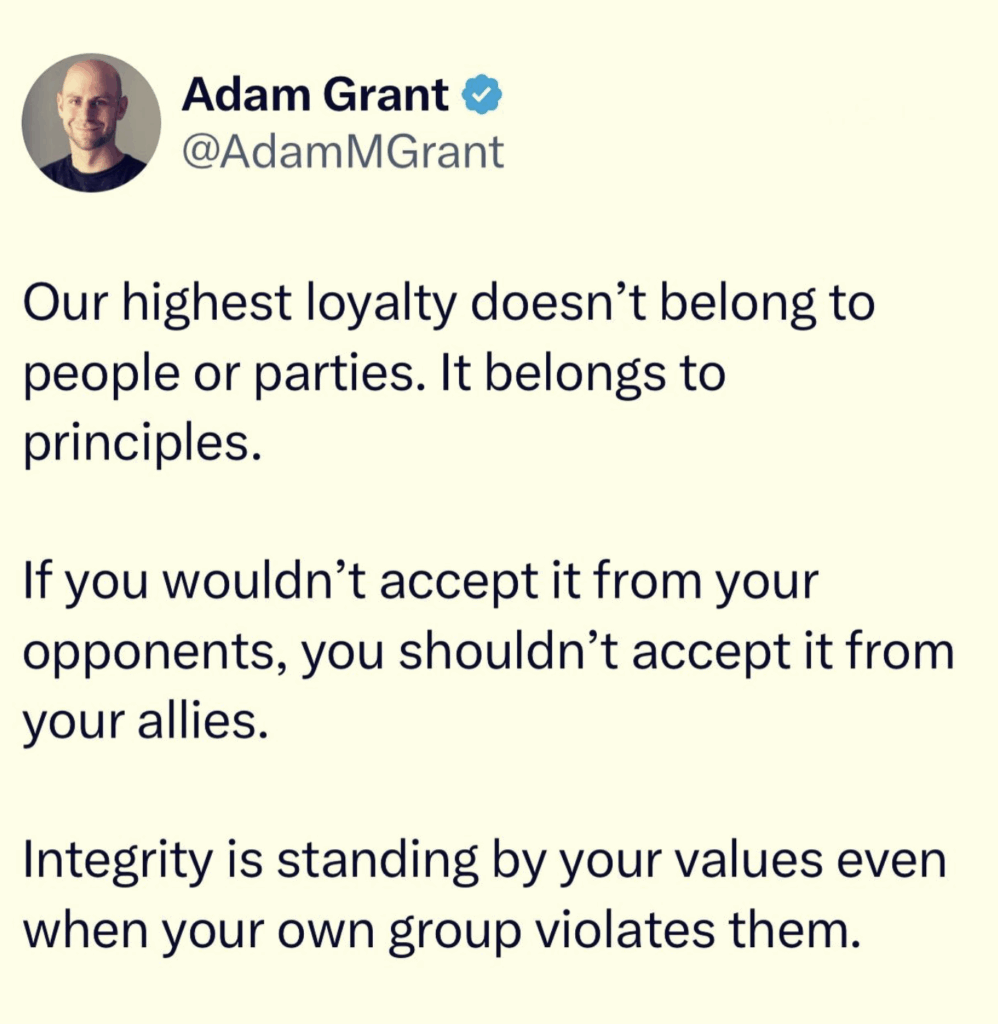
Allow people to decide “this is not okay.” I understand this might not be possible in many situations, but that’s for you to decide. We need to bring back nuance. We can leave room for people to decide “I believe these principles and causes” AND also “this is not okay.” I know we all don’t exist in the same reality, in an economy that’s designed to capture more of our attention with division and anger. But I think the only way we get back through this is together. I hope more people heed Professor Adam Grant’s words:
“They kept going because they were holding on to something”
I don’t know what the future holds.
I do know there will be another atrocity tomorrow, and an ecological disaster the day after, and the defunding or the ensh*ttification of something else after that. Another once-in-a-lifetime collapse or storm or travesty will take place. Social media will continue to get worse. The economy will continue to squeeze more productivity out of fewer and fewer employees.
And yet, hope, humans will endure, and we will get through whatever sh*tstorm heads our way next. Anne Lamott shared the following quote from Gandhi in that previous essay:
“When I despair, I remember that all through history the way of truth and love have always won.”
I know people will keep showing up, the truth will win out.
Like John Green, I’ve decided that “hope is a practice.” Like Nick Cave, I’d decided that hopefulness is an “adversarial behavior that lays waste to cynicism.” Like Dr. Pooja Lakshmin, I’ve decided ”hope can be practiced by locating a deep desire, value, or commitment and taking a step towards it.”
I choose hope, because the alternative is too heartbreaking.
I’m reminded of the wise words of Sam Gamgee in Tolkien’s The Two Towers:
“But in the end, it’s only a passing thing this shadow, even darkness must pass. A new day will come, and when the sun shines, it’ll shine out the clearer. I know now folks in those stories had lots of chances of turning back, only they didn’t.
They kept going because they were holding on to something. That there’s some good in this world, Mr. Frodo, and it’s worth fighting for.”
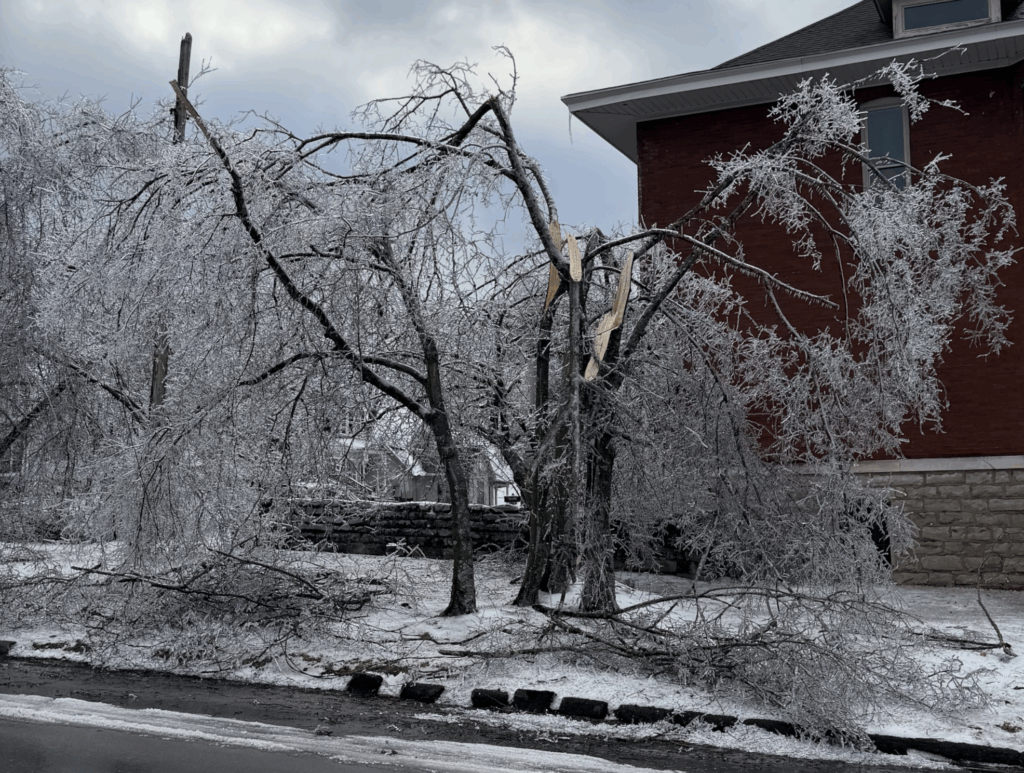
The sun came out today. The frozen trees have started to thaw.
I woke up and chose hope. I took a shower for the first time in a while. I made coffee and breakfast. I put on my favorite playlist. I wrote in my journal. I watered my little plant.
I walked to a coffee shop, where I noticed an older gentleman reading The Two Towers. I introduced myself, and asked him how many times he had read it. He laughed and said he had lost count; he was rereading Tolkien to keep up with his grandkids who were reading it for the first time. We swapped stories about Tolkien, he gave me some great CS Lewis recommendations.
I took some photos of the trees:
And then I did the thing that creates meaning and joy and hope for me:
I wrote.
I sat down and typed these words with the hope they help somebody live a tiny bit better, or live a bit differently, or a bit more safely, with a bit more hope.
There is more bad weather coming again this upcoming weekend. I know another tragedy will take place today, possibly by the time I hit publish. Another civil liberty will be infringed and another environmental disaster will happen somewhere on this planet.
And through all of this, we can look for the helpers. Hopefully we can be those helpers too.
Next week, hopefully I can finally share that essay on happiness. I also can’t wait to finally talk about where our little newsletter community is headed in 2026.
Thanks for reading.
-Steve